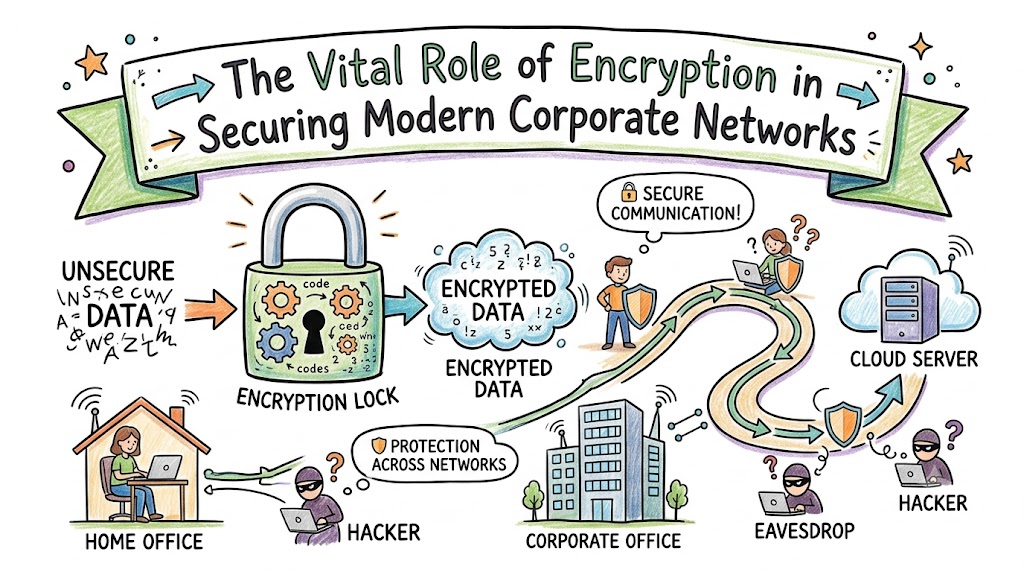
Encryption acts as the ultimate shield for data traveling across interconnected systems. When a device sends information over a network, malicious actors can intercept it if it remains unprotected. Consequently, encryption scrambles this plain text into unreadable ciphertext using complex mathematical algorithms. Only authorized parties possessing the correct cryptographic key can decode and read this information. As cyber threats become more sophisticated, implementing robust protocols forms the foundation of any reliable defense strategy. Organizations must prioritize these security measures to safeguard intellectual property, maintain user privacy, and prevent devastating data breaches.
To build a secure infrastructure, engineering teams need comprehensive educational resources and professional guidance. You can accelerate your technical journey and master advanced security architectures by exploring the specialized programs at Noopsschool. Developing a deep understanding of cryptographic workflows allows teams to stay ahead of evolving vulnerabilities. Furthermore, active implementation of these tools ensures that sensitive corporate assets remain completely hidden from unauthorized eyes.
Key Operational Concepts You Must Know
Symmetric vs. Asymmetric Encryption
Symmetric encryption utilizes a single, shared cryptographic key to handle both the encryption and decryption processes. Because this method requires minimal computational overhead, systems use it extensively for bulk data transmission. However, securely distributing the single key across a vast network presents a significant logistical challenge. If an unauthorized attacker intercepts the secret key during transit, the security of the entire pipeline collapses instantly. Therefore, engineers must pair symmetric algorithms with secure key-exchange protocols to maintain full confidentiality.
In contrast, asymmetric encryption relies on a mathematically linked pair of keys known as the public key and the private key. Anyone can freely distribute the public key to encrypt data, but only the corresponding private key can decrypt it. Although this approach effectively solves the key distribution dilemma, it demands significantly more processing power than symmetric options. Consequently, modern network security frameworks combine both methods to leverage their respective strengths. They use asymmetric encryption to securely establish a session key, and then switch to symmetric encryption for the rest of the communication.
Data in Transit vs. Data at Rest
Data in transit refers to any information actively traveling across local networks or the public internet. While moving between endpoints, this data is highly vulnerable to interception via packet sniffing and man-in-the-middle attacks. Network administrators mitigate this specific risk by deploying transport-layer encryption protocols like Transport Layer Security. This continuous protection guarantees that even if a hacker captures data packets in mid-air, the contents remain entirely unreadable. Therefore, safeguarding moving information forms the very core of standard internet communication defenses.
On the other hand, data at rest encompasses all information sitting permanently on physical storage drives, databases, or cloud servers. Although this data is not actively moving, it faces major threats from physical theft, unauthorized server access, and insider compromises. Organizations protect these assets by applying full-disk encryption or encrypting specific database columns containing sensitive customer information. Moreover, proper storage security relies heavily on robust access controls and automated cryptographic key rotation schedules. Combining both transport and storage defenses establishes a comprehensive data security perimeter for the enterprise.
Cryptographic Protocols (TLS, SSL, IPSec)
The Transport Layer Security protocol serves as the primary standard for securing communication over the World Wide Web today. It succeeded the older Secure Sockets Layer protocol, which security professionals completely deprecated due to inherent cryptographic vulnerabilities. TLS operates by initiating a secure handshake that authenticates the server identity and negotiates cryptographic algorithms before transmitting any user data. This vital process ensures that web browsing, online banking, and corporate API calls remain safe from external prying. As a result, maintaining updated TLS configurations is non-negotiable for modern systems.
| Protocol | OSI Layer | Primary Use Case | Key Advantage |
| TLS | Application/Transport | Web Browsing & API Traffic | Strong authentication and web wide adoption |
| IPSec | Network | VPNs & Site-to-Site Tunnels | Encrypts entire IP packets seamlessly |
| SSL | Transport | Legacy Web Traffic | Deprecated; historical baseline only |
For network-level protection, Internet Protocol Security provides a comprehensive suite of protocols that encrypts entire data packets at the network layer. Engineers frequently deploy IPSec to build highly secure Virtual Private Networks that connect remote offices together. Because it encrypts all traffic passing through the tunnel, applications do not need individual encryption configurations to run safely. Consequently, this protocol offers a seamless way to establish trusted communication over untrusted public infrastructure. Managing these protocols correctly forms a critical piece of any corporate security posture.
Platform Implementation vs. Culture — What’s the Real Difference?
Technical Execution
Platform implementation focuses heavily on deploying concrete engineering tools, configuring hardware modules, and writing automated software scripts. For example, engineers spend hours setting up certificate authorities, configuring firewalls, and embedding cryptographic libraries directly into application code. These tangible technical actions establish the foundational security infrastructure required to block unauthorized access attempts across the corporate grid. However, relying solely on technology leaves organizations completely exposed to human errors and operational oversight. Even the most advanced firewall cannot protect data if engineers accidentally expose cryptographic keys in public source code repositories.
Furthermore, technical execution requires continuous maintenance, regular software patching, and routine performance tuning to counter emerging software vulnerabilities. Teams must carefully monitor system latency, upgrade outdated cipher suites, and audit encryption configurations to keep pace with changing threats. While these systematic tasks create a strong technical barrier against attacks, they operate purely within a mechanical domain. Technology alone cannot force human operators to follow security guidelines or value data privacy during daily workflows. Therefore, excellent platform deployment represents only half of the overall enterprise security equation.
Mindset and Behaviors
A robust security culture focuses directly on the shared habits, daily behaviors, and core mindsets of every team member. When an organization embraces a security-first culture, developers naturally avoid hardcoding credentials into software builds without needing automated reminders. Employees at all levels actively question unusual system behaviors, report potential phishing schemes, and protect corporate assets as a matter of habit. This internal commitment transforms security from a restrictive set of rules into an organic organizational value. Ultimately, a strong cultural foundation prevents human mistakes that technical tools might fail to catch.
Building this proactive mindset requires continuous education, interactive training sessions, and clear communication from company leadership regarding security expectations. When management actively prioritizes and rewards secure behaviors, teams stop viewing compliance as an annoying operational bottleneck. Instead, they recognize that maintaining strong encryption and data protection protocols directly safeguards the company’s future and market reputation. Cultivating this deep sense of personal responsibility ensures that security practices remain effective even as platform tools evolve. A healthy culture successfully bridges the gap between raw technical capability and real-world human operational compliance.
Finding the Balance
Achieving an optimal security posture requires a deliberate, harmonious integration of both advanced platform tools and progressive cultural mindsets. Organizations that invest exclusively in expensive security software while neglecting employee training remain highly vulnerable to social engineering tactics. Conversely, a highly security-conscious workforce cannot stop sophisticated network attacks without modern cryptographic tools and automated platform defenses. Therefore, leadership must allocate resources evenly between technical infrastructure upgrades and comprehensive cultural development initiatives. This balanced approach ensures that human awareness and technological shields reinforce each other continuously.
- For Platform Engineers: Automate the injection of TLS certificates into deployment pipelines to make encryption the default operational state.
- For Security Leaders: Conduct regular threat-modeling workshops to help developers understand the real-world impact of cryptographic choices.
- For Operations Teams: Implement continuous monitoring systems that alert engineers to misconfigured ciphers before they reach production environments.
- For Executives: Align corporate compliance policies with daily developer workflows to minimize friction and prevent unauthorized workarounds.
Real-World Use Cases of Modern Operations
Secure Remote Work
The massive global shift toward remote work environments has fundamentally changed the traditional corporate network boundary. Today, employees access sensitive internal databases, proprietary source code, and corporate applications from a wide variety of unsecured home networks. To protect this traffic, operations teams deploy managed Virtual Private Networks that leverage robust network-layer encryption protocols. This setup ensures that all data moving between a remote laptop and internal corporate servers remains completely encrypted. As a result, companies can maintain high operational continuity without exposing internal infrastructure to public internet threats.
Additionally, organizations combine these network tunnels with Zero Trust Network Access frameworks to enforce continuous user identity validation. Under this model, the system treats every connection request as potentially hostile, regardless of its geographic or network origin. Cryptographic verification occurs at every stage of the session, preventing lateral movement if an attacker compromises a single endpoint device. Implementing these combined strategies allows modern enterprises to build resilient, distributed workforces that operate safely from any global location.
Cloud Migrations
Migrating complex enterprise workloads to public cloud platforms introduces unique data visibility challenges that require meticulous operational planning. As data moves from on-premises data centers to shared cloud environments, maintaining absolute ownership over encryption keys becomes critical. Operations teams utilize cloud-native Key Management Services to generate, rotate, and control cryptographic assets across distributed virtual private clouds. This practice ensures that the cloud infrastructure provider cannot view or access the contents of the hosted corporate databases. Consequently, enterprises can confidently leverage cloud scalability while maintaining strict custody of their proprietary data assets.
[On-Premises Data] ---> (TLS Encrypted Transit) ---> [Cloud Provider Infrastructure]
                                                              |
                                                    (KMS Key Applied)
                                                              v
                                                 [Encrypted Cloud Storage]
Furthermore, modern cloud architectures rely heavily on automated infrastructure-as-code scripts to deploy and configure virtual network gateways securely. These automated deployment scripts enforce HTTPS communication across all cloud microservices, preventing internal data sniffing within the virtual infrastructure. By embedding encryption policies directly into automation manifests, operations teams eliminate the risk of manual configuration errors during large-scale migrations. This systematic approach guarantees that newly provisioned cloud environments comply with corporate data security standards instantly.
Financial Transactions
The global financial sector relies entirely on robust, end-to-end network encryption to preserve consumer trust and protect transactional ecosystems. Whenever a customer swipes a payment card or executes an online bank transfer, point-to-point encryption protects the financial payload. This deep encryption wraps the payment data at the exact moment of capture and keeps it hidden until it reaches the processor. Consequently, malicious actors cannot steal credit card numbers or alter financial amounts as the transaction travels across networks. This absolute protection forms the backbone of global commerce and prevents massive financial fraud schemes.
- PCI-DSS Compliance: Financial institutions must encrypt all transmitted cardholder data to meet rigorous global payment card industry standards.
- Hardware Security Modules: Banks use specialized physical computing devices to safeguard cryptographic keys and manage high-volume decryption tasks.
- Tokenization Strategies: Systems replace sensitive account numbers with temporary cryptographic tokens to minimize data exposure during authorization processes.
- API Security: Financial microservices use mutually authenticated TLS connections to exchange transaction data safely between institutional servers.
Common Mistakes in Operations Engineering
Using Outdated Ciphers
A frequent and dangerous mistake in network operations is relying on obsolete cryptographic algorithms like Data Encryption Standard or RC4. While these ciphers were once industry standards, modern computing power allows attackers to crack them with relative ease. Continuing to use deprecated protocols leaves corporate networks wide open to automated decryption attacks and severe data leaks. Unfortunately, teams often maintain these weak configurations to avoid breaking legacy software applications that cannot support modern updates. This choice trades immediate operational convenience for catastrophic security risks that can destroy an organization’s reputation.
To fix this issue, engineering teams must actively phase out legacy protocols and transition to Advanced Encryption Standard configurations. They need to perform regular automated security scans to detect weak cipher suites across all public and internal endpoints. Additionally, operations managers must establish clear deprecation timelines for legacy internal systems to keep corporate infrastructure modern. Prioritizing cryptographic updates ensures that network defenses remain highly effective against sophisticated contemporary decryption strategies.
Poor Key Management
Deploying top-tier encryption algorithms means very little if the underlying cryptographic keys are handled carelessly by engineering teams. A common mistake involves hardcoding private keys directly into application source code or storing them in unencrypted text files. When developers commit these files to shared repositories, unauthorized personnel or malicious actors can easily discover and exploit them. Once an attacker gains access to the private keys, they can decrypt all network traffic and compromise the system completely. Therefore, securing key storage is just as vital as selecting the encryption algorithm itself.
[Vulnerable Practice]: Source Code File ---> Contains Hardcoded Private Key ---> Exposed in Repo
[Secure Practice]:     Source Code File ---> Requests Key via API ---> Secure Key Vault (Encrypted)
Additionally, organizations frequently fail to establish automated key rotation schedules, allowing the same cryptographic keys to remain active for years. The longer a single key stays in service, the greater the likelihood that an attacker will compromise it. Operations teams must utilize dedicated, secure key management vaults that automate both storage and rotation processes seamlessly. Restricting key access via strict role-based permissions prevents unauthorized internal exposure and limits the blast radius of potential breaches.
Neglecting Internal Traffic
Many operations teams focus entirely on securing the outer corporate perimeter while leaving internal network traffic completely unencrypted. This outdated approach assumes that every user, device, and service inside the private corporate network is completely trustworthy. However, if an attacker breaches the perimeter firewall, they can easily sniff all internal plain-text communication without opposition. This lack of internal security allows lateral movement, enabling hackers to compromise deep database systems after breaching a minor endpoint. Organizations must abandon this perimeter-only strategy to protect themselves from modern multi-stage network intrusions.
Fixing this vulnerability requires implementing a strict Zero Trust architecture that mandates end-to-end encryption for all internal network traffic. Every service-to-service communication event inside the corporate datacenter must use authenticated and encrypted transport channels like mutual TLS. This internal defense ensures that even if a bad actor gains access to a local network switch, they cannot read data. Treating internal traffic with the same suspicion as public internet traffic creates a highly resilient and secure corporate environment.
How to Become an Operations Expert — Career Roadmap
Foundational Skills
Starting a career in operations engineering requires a deep, practical understanding of Linux operating systems and core networking principles. You must master the command-line interface, learn file system management, and understand user permission structures inside out. Additionally, you need a strong grasp of the OSI model, focusing specifically on how data packets travel across layers. Learning how to analyze network traffic using tools like Wireshark allows you to troubleshoot connectivity and security issues efficiently. These core technical competencies form the essential bedrock for all advanced infrastructure management tasks.
- System Administration: Master Linux system configuration, process management, log analysis, and shell scripting languages like Bash or Python.
- Networking Fundamentals: Understand IP routing, subnetting, Domain Name System operations, and basic firewall configurations thoroughly.
- Version Control: Learn Git workflows inside out to manage infrastructure code, track configurations, and collaborate with development teams.
- Security Basics: Study fundamental cryptographic concepts, including public-private key pairs, hashing functions, and digital signatures.
Intermediate Certifications
As you gain hands-on experience, earning respected industry certifications helps validate your technical knowledge and accelerates your career progression. Aspiring operations specialists should target certifications that focus on cloud infrastructure, automated configurations, and core network security protocols. Programs like the Cisco Certified Network Associate provide an excellent validation of routing, switching, and network environment security. Additionally, cloud-specific certifications from major providers demonstrate your ability to design and manage secure, scalable virtual architectures.
Choosing certifications that require practical, hands-on labs ensures you develop real-world problem-solving skills rather than just memorizing theoretical concepts. For example, pursuing Kubernetes certifications validates your ability to manage containerized workloads and secure cluster networking channels effectively. These credentials signal to employers that you can handle complex infrastructure challenges and implement modern automation tools. Continuous learning through structured certifications keeps your skill set aligned with the rapidly changing needs of the tech industry.
Advanced Specializations
To reach the highest levels of operations engineering, you must specialize in advanced domains like DevSecOps or Site Reliability Engineering. This stage involves embedding automated security checks directly into continuous integration and deployment pipelines to catch vulnerabilities early. You will design self-healing architectures, configure multi-region failovers, and implement advanced cryptographic key management strategies across cloud systems. Mastering infrastructure-as-code tools allows you to deploy entire, secure corporate networks using repeatable, peer-reviewed software files.
[Code Repository] ---> [Automated Security Scan] ---> [Encrypted Deployment] ---> [Monitored Infrastructure]
Ultimate expertise requires balancing technical mastery with strategic architectural design capabilities. You must learn to evaluate system risks, estimate cryptographic overhead costs, and design security policies that support corporate velocity. By bridging the gap between deep technical implementation and high-level business goals, you become an invaluable corporate asset. Top-tier experts continuously mentor junior engineers and design resilient, secure platforms that safely empower modern global enterprises.
FAQ Section
- What is the main difference between symmetric and asymmetric encryption?
Symmetric encryption uses a single secret key for both locking and unlocking data, which makes it incredibly fast but difficult to distribute safely. Asymmetric encryption solves this distribution problem by using a public key to encrypt data and a separate private key for decryption.
- Why should companies avoid using old encryption protocols like SSL?
Legacy protocols contain known security flaws that modern computing power can easily exploit to intercept and decrypt sensitive corporate traffic. Upgrading to modern standards like TLS ensures your data remains completely secure against sophisticated automated attacks.
- How does encryption protect corporate data traveling across public networks?
It scrambles plain-text information into unreadable ciphertext before it leaves the source device, rendering it useless to anyone without the key. Even if an attacker intercepts the data packets in transit, they cannot read or manipulate the underlying contents.
- What does a Zero Trust architecture mean for internal corporate networks?
Zero Trust removes the assumption that internal traffic is naturally safe, requiring continuous authentication and encryption for every single connection request. This strategy prevents hackers from moving laterally through internal networks if they manage to breach the outer firewall.
- How often should engineering teams rotate their cryptographic keys?
Organizations should automate key rotation schedules to update keys every few months, or immediately if they suspect any operational compromise. Frequent rotation significantly reduces the amount of data an attacker could access if a single key is leaked.
- Can implementing strong network encryption cause significant system latency?
Modern hardware possesses specialized processors designed to handle cryptographic mathematics quickly, minimizing noticeable performance lag for users. Correctly configuring cipher suites ensures you maintain a highly secure network posture without sacrificing operational speed.
Final Summary
Implementing strong network encryption is no longer an optional luxury; it is an absolute necessity for modern digital business operations. By converting sensitive data into unreadable ciphertext, encryption protects corporate assets from interception, physical theft, and sophisticated cyber attacks. Organizations must focus equally on deploying modern cryptographic tools and building a proactive corporate culture that prioritizes security. This combined approach ensures that technical shields and human awareness work together continuously to defend the enterprise. Eliminating common mistakes, like using outdated ciphers or neglecting internal traffic, dramatically reduces an organization’s overall vulnerability surface.
As network environments grow more complex, the demand for highly skilled operations engineers who understand encryption will continue to rise. Aspiring professionals can build a successful career by mastering networking fundamentals, earning cloud certifications, and specializing in automated security pipelines. Staying dedicated to continuous learning and implementing robust cryptographic frameworks allows engineering teams to outpace evolving security threats. Ultimately, maintaining end-to-end encryption preserves consumer trust, fulfills regulatory compliance, and ensures long-term operational resilience. Consistent focus on these core principles establishes a reliable foundation for any modern, data-driven organization.