Understanding the Architecture of Network Infrastructure Security
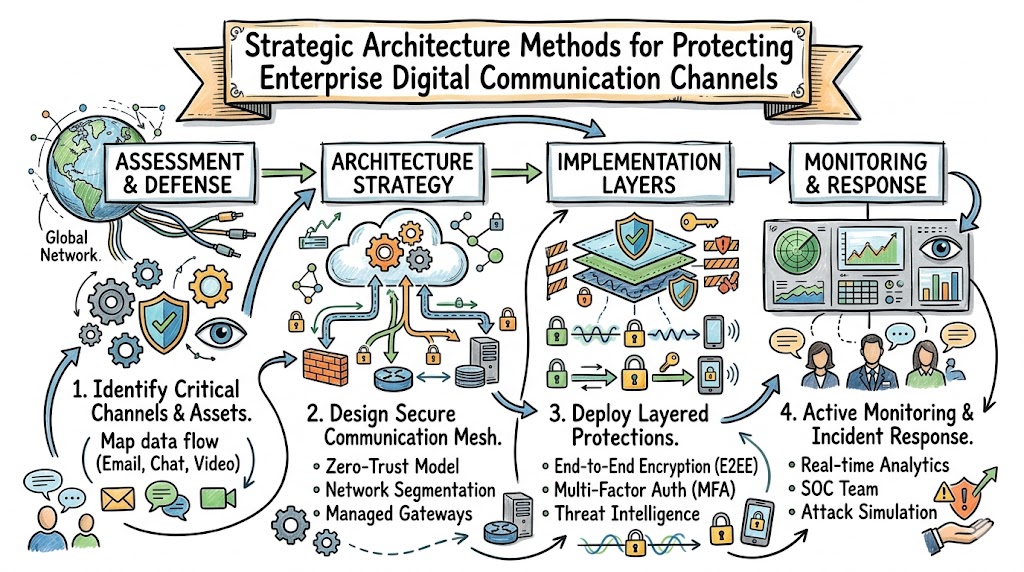
Network infrastructure security is the tactical deployment of automated firewalls, cryptographic access controls, and segmented routing pathways designed to shield corporate hardware and cloud environments from adversarial penetration. This technical framework operates as a continuous defense matrix, monitoring data packets at every gateway to ensure malicious actors cannot intercept or disrupt enterprise information assets. By executing these defensive methods, organizations transform fragile, open networks into hardened, resilient environments capable of sustaining immense operational scale.
Imagine a sudden, silent system disruption ripping through your primary data center at midnight, freezing transactions and locking user accounts instantly. This operational bottleneck typically stems from unpatched vulnerabilities or misconfigured firewalls, proving that weak perimeter defense triggers catastrophic business downtime.
Modern technical teams require this robust framework to scale operations safely while handling massive traffic loads across distributed cloud networks. Therefore, this comprehensive guide covers everything from historical architectural origins, core engineering principles, performance metrics, and cultural implementations to practical defensive tools.
To build a resilient defense matrix that shields your organization from sophisticated threats, professionals must master advanced defensive tactics. You can acquire these critical technical skills by pursuing comprehensive validation programs at Noopsschool, which empowers engineering teams to eliminate security vulnerabilities systematically.
The Origin of Systems Infrastructure
The Early Industrial Bottlenecks
Traditional enterprise operations regularly suffered from severe communication silos, where separate departments managed hardware installations without consulting software developers. Consequently, engineers deployed applications onto unoptimized servers, creating frequent performance crashes and extensive patch management delays. Siloed technical groups struggled because they lacked centralized visibility, meaning that configuration mistakes remained undetected until an actual security breach occurred.
Moving Toward Unified Workflow Automation
Breaking down corporate silos and unifying workflows completely transformed how large organizations manage and scale their physical and virtual hardware assets. By introducing shared automation pipelines, security protocols merged directly into the initial software development lifecycle rather than acting as a late afterthought. This unified cultural shift allowed administrators to validate firewall rules and access control lists automatically before code ever reached production servers.
Global Expansion Across Commercial Ecosystems
Operational frameworks rapidly spread across modern large-scale tech enterprises as global internet traffic expanded exponentially. Businesses quickly recognized that manual network tuning could not sustain the rapid growth of distributed cloud computing architectures. As a result, standardized deployment patterns emerged globally, allowing companies to replicate secure environment baselines across multiple international cloud regions simultaneously.
Defining Strategic Operations Management
The Core Operational Structure
The foundational architecture of modern infrastructure relies on a continuous, secure flow of information across interconnected physical and software-defined layers. Data moves systematically through protected gateways, where real-time monitoring tools inspect traffic packets for anomalous behaviors before routing them deeper into the core network. This structural configuration ensures that every internal component maintains strict boundary isolation, preventing unauthorized lateral movement across the enterprise environment.
Daily Tasks of Systems Coordinators
Systems coordinators execute critical technical tasks daily to maintain an optimal balance between high system availability and ironclad security parameters. These specialists regularly review automated vulnerability scans, rotate cryptographic access keys, and update internal routing tables to neutralize emerging vector threats. Furthermore, they patch software dependencies across thousands of active container instances while ensuring that load balancers distribute user traffic evenly.
Localized Control vs. Broad System Architecture
Managing an entire multi-system infrastructure requires balancing granular component tracking against macro-level architectural health observations. Localized control focuses heavily on specific device configurations, such as tuning an individual database server or configuring a single edge switch. Conversely, broad system architecture demands a holistic viewpoint, ensuring that diverse cloud networks, on-premises centers, and third-party APIs integrate securely without creating central points of failure.
The Efficiency Mindset
Prioritizing long-term stability and system reliability requires a profound cultural shift away from reactive troubleshooting toward proactive engineering. Technical teams must view infrastructure as an evolving software product, building self-healing networks that automatically isolate compromised segments during an active incident. This long-term efficiency mindset reduces recurring operational debt, allowing engineers to focus on scaling infrastructure safely instead of constantly extinguishing fire emergencies.
The 7 Core Principles of Best Practices for Securing Your Network Infrastructure
1. Embracing Risk and Managing Variability
Achieving absolute perfection within complex digital environments remains structurally impossible, meaning that teams must design architectures to handle acceptable systemic risk. Engineers calculate exactly how much network variance the enterprise can tolerate before customer experiences degrade noticeably. By accepting this baseline reality, organizations can implement proportional defensive measures without over-engineering restrictive controls that paralyze regular developer velocity.
2. Establishing Service Level Objectives (SLOs)
Technical teams define measurable performance targets to quantify the acceptable boundary lines of systemic network success. These objective parameters ensure that defensive security layers never inadvertently choke operational data throughput or inflate processing latency beyond baseline metrics. Consequently, defining strict targets allows administrators to balance necessary security constraints against the practical performance demands of end users.
3. Eliminating Toil and Manual Processes
Repetitive manual configurations represent a major vulnerability because human operators frequently introduce configuration errors when typing terminal commands under pressure. Organizations must actively identify these routine tasks, such as manual port updates or firewall adjustments, and engineer them away using automated software scripts. Eliminating this mundane operational layer frees valuable engineering talent to focus on deep architectural threat modeling.
4. Monitoring & Observability Across the Pipeline
Total visibility across the entire operational environment completely prevents dangerous blind spots that malicious actors exploit to hide their network footprints. Systems must generate detailed, continuous telemetry logs from every router, virtual switch, and API gateway across the enterprise ecosystem. This comprehensive data collection allows real-time analysis tools to identify subtle anomalies, indicating a potential breach before it manifests as a catastrophic outage.
5. Automation Over Manual Coordination
Scaling modern enterprise workflows efficiently requires an automated software approach rather than relying on endless manual email approvals or coordination meetings. Network configurations must exist entirely as code files stored within version control systems, triggering automated deployment pipelines upon approval. This programmatic approach ensures that every infrastructure modification undergoes standardized security validation tests before integrating into active live environments.
6. Release Engineering and Deployment Stability
Consistent, predictable, and safe infrastructure delivery strategies minimize the accidental introduction of critical security vulnerabilities during regular updates. Engineering teams utilize blue-green deployments or canary rollouts, exposing new network routing rules to a tiny fraction of live traffic initially. This controlled methodology ensures that if an updated configuration behaves unexpectedly, administrators can roll back the changes instantly without disrupting global users.
7. Simplicity in Network Architecture
Keeping digital environments clean, flat, and minimal directly reduces the overall failure surface that hackers can potentially exploit. Unnecessary nested subnets, legacy routing protocols, and abandoned firewall rules generate hidden operational complexity that obscures active security threats. By enforcing minimalist architectural designs, technical teams ensure that every active network component serves a clear, traceable, and easily defendable business purpose.
Key Operational Concepts You Must Know
SLA vs. SLO vs. SLI — Explained Simply
Understanding performance metrics requires breaking down these three distinct operational concepts that guide infrastructure management teams.
- Service Level Agreement (SLA): The formal, legally binding commitment made directly to external clients regarding overall network availability and remediation timelines.
- Service Level Objective (SLO): The internal target metric that engineering teams strive to achieve, always set at a stricter threshold than the external agreement.
- Service Level Indicator (SLI): The actual real-time measurement of a specific compliance metric, such as the exact percentage of successful network requests.
Error Budgets — The Game Changer for Operational Risk
Error budgets represent the exact amount of allowable downtime or network instability an enterprise can experience before development pauses completely. This operational metric effectively balances structural innovation with baseline system safety by treating reliability as a spendable currency. When a network consumes its entire budget due to frequent security outages, teams halt feature deployments to focus exclusively on hardening the infrastructure.
Toil — The Silent Productivity Killer in Infrastructure
Toil encompasses repetitive, manual, operational tasks that scale linearly with network size but lack long-term engineering value. To eliminate this productivity killer, teams must calculate time expenditures, write automated playbooks, and replace manual scripts with self-remediating infrastructure tools. Systematically reducing toil ensures that network administrators dedicate their energy to proactive architectural improvements rather than routine firefighting.
Incident Management & Postmortems
Cultivating a blameless organizational culture ensures that engineering groups focus entirely on fixing structural flaws rather than punishing individual human operators. When an unexpected network breach occurs, teams execute a comprehensive root cause analysis to document how defensive systems failed to contain the threat. This rigorous approach transforms stressful operational failures into invaluable educational lessons, continuously hardening corporate infrastructure against future attacks.
Capacity Planning
Technical teams must accurately forecast future traffic growth trends to prepare enterprise network infrastructure ahead of massive seasonal demand spikes. By analyzing historical utilization patterns, administrators scale bandwidth capacity, provision virtual gateways, and distribute load balancing nodes well in advance. This proactive planning prevents system saturation emergencies, ensuring that security filtering layers retain sufficient processing power during unexpected traffic floods.
The Four Golden Signals of Pipeline Performance
To maintain complete situational awareness, network engineers must continuously monitor these four critical operational metrics across every active delivery pipeline:
| Metric | Focus Area | Impact on Security |
| Latency | The time taken to service a request | High latency may indicate an ongoing Denial of Service attack. |
| Traffic | The total demand being placed on the network | Sudden spikes can reveal unauthorized data exfiltration attempts. |
| Errors | The rate of requests that fail systematically | A rise in auth errors often points to a brute-force penetration. |
| Saturation | The measure of system resource utilization | Maxed out buffers can cause security appliances to drop packets. |
Platform Implementation vs. Culture — What’s the Real Difference?
The Philosophy Difference
Platform implementation focuses heavily on deploying concrete technical solutions, such as installing physical firewalls, configuring encryption protocols, and writing automated access rules. Conversely, security culture represents the collective mindset, organizational habits, and shared engineering values that govern how employees interact with infrastructure daily. Having advanced technical tooling matters very little if engineers bypass security protocols to accelerate code deployments.
Roles & Responsibilities Compared
While both areas work toward system optimization, their daily operational duties differ significantly across the enterprise ecosystem:
- Platform Engineering Specialists: Focus on building automated self-service infrastructure portals, maintaining cloud integration templates, and updating central routing matrices.
- Culture and Reliability Advocates: Focus on facilitating blameless postmortem reviews, establishing organizational error budget guardrails, and running team security workshops.
- Network Defense Operators: Focus on triaging real-time intrusion alerts, patching immediate system vulnerabilities, and analyzing malicious traffic patterns.
Can You Have Both Disciplines?
Separate engineering philosophies must coexist and actively support one another within progressive, high-velocity technical organizations. Concrete platform tooling provides the actual physical frameworks that allow cultural security values to manifest as repeatable operational habits. When these disciplines align, developers use secure platform pathways naturally because automated systems make the right security choice the easiest path.
Which One Should Your Team Adopt?
Choosing an initial focal point depends entirely on your current organizational size and foundational engineering maturity levels:
| Organization Size | Primary Focus Area | Implementation Strategy |
| Early-Stage Startups | Cultural Mindset Baseline | Instill shared security ownership before automated tools become complex. |
| Mid-Market Enterprises | Automated Platform Guardrails | Deploy standardized infrastructure templates to enforce security across teams. |
| Large Global Corporates | Dual-Engine Integration | Scale advanced platform engineering while reinforcing continuous education. |
Real-World Use Cases of Modern Operations
How Tech Leaders Use Operational Metrics
Major software enterprises track real-time telemetry data across billions of concurrent network requests to detect micro-anomalies instantly. By aggregating firewall logs, packet routing durations, and gateway authentication patterns, data systems build a dynamic baseline of normal network behavior. Consequently, when an edge routing node exhibits a minor deviation, automated systems flag it for immediate inspection before a breach materializes.
Chaos Engineering Approaches to Resilient Systems
Modern infrastructure teams practice chaos engineering by intentionally injecting controlled failures, such as shutting down random core switches, directly into production environments. This proactive destruction reveals hidden architectural weaknesses, proving whether backup routing paths engage automatically without dropping active user sessions. Intentionally breaking elements under supervision ensures that networks survive unpredictable real-world adversarial attacks without suffering widespread user downtime.
Handling Reliability at Massive Scale
Distributed microservice architectures process millions of distinct API transactions securely by utilizing isolated network meshes that encrypt data in transit. These highly segmented architectures prevent an intrusion in one public-facing container from compromising sensitive backend payment databases. By enforcing strict zero-trust validation at every internal boundary line, massive web platforms maintain high availability even while actively mitigating localized network threats.
High-Availability in Fintech Operations
Financial transaction platforms operate under zero-tolerance mandates regarding data packet loss, processing delays, and unauthorized access vectors. These platforms utilize redundant multi-region network fabrics that mirror encrypted ledger updates across separate geographical zones in real time. This extreme architectural design guarantees that even if an entire physical region goes completely offline, financial operations continue processing seamlessly without losing a single cent.
Scaled-Down but Essential Systems for Startups
Early-stage engineering teams can apply advanced security principles efficiently without maintaining massive dedicated operations teams or expensive enterprise tooling budgets. Startups leverage cloud-native managed firewalls and automated identity management policies that scale down to zero when traffic drops. This minimalist approach allows lean organizations to establish institutional-grade network protection baselines from their very first day in operation.
Common Mistakes in Operations Engineering
Mistake 1 — Confusing System Management with Just Being On-Call
Many organizations mistakenly view infrastructure security as a reactive task centered around assignable alert tickets and overnight on-call rotations. True operational discipline focuses heavily on proactive engineering, designing resilient systems that eliminate entire classes of vulnerabilities through automated architecture updates. Forcing engineers to constantly manually remediate repeating alerts drains team morale while leaving deeper structural design defects unaddressed.
Mistake 2 — Setting Unrealistic SLOs
Demanding perfect network availability stalls feature release velocities and burns out engineering talent without providing tangible business benefits. Attempting to achieve absolute perfection requires massive capital investments in redundant hardware that ultimately slows data processing speeds due to complex synchronization loops. Smart teams establish realistic reliability targets, acknowledging that minor variations provide the necessary space for continuous software innovation.
Mistake 3 — Ignoring Toil Until It’s Too Late
Accumulating massive operational debt occurs when teams repeatedly choose manual band-aid fixes over permanent, automated infrastructure engineering solutions. When repetitive tasks consume more than half of an engineering team’s daily capacity, critical security upgrades get indefinitely delayed. This systemic bottleneck leaves production networks highly exposed to known vulnerabilities simply because administrators lack the time to apply patches.
Mistake 4 — Skipping Blameless Postmortems
Punishing individual employees for accidental configuration mistakes creates a toxic corporate culture where engineers actively hide infrastructure vulnerabilities to protect their jobs. Organizations that omit blameless postmortems lose the opportunity to discover why their technical safeguards allowed a human error to disrupt operations. Hardening complex systems requires encouraging total transparency so teams can fix systemic flaws together.
Mistake 5 — Monitoring Without Actionable Alerts
Configuring monitoring systems to broadcast vague notifications for every minor CPU spike triggers severe alert fatigue across engineering teams. When non-critical notifications flood communication channels, administrators naturally begin ignoring alerts, eventually overlooking genuine high-severity breach indicators. Every automated alert must point to a distinct, actionable problem that explicitly requires human engineering intervention to resolve.
Mistake 6 — Not Involving Operational Engineers in the Design Phase
Excluding operations and security specialists from initial application architecture discussions leads to unoptimized systems that prove incredibly difficult to defend in production. Software developers frequently design application layouts that require broad firewall permissions, inadvertently creating massive security vulnerabilities. Involving operational infrastructure experts from day one ensures that new systems inherit strict security parameters naturally.
Essential Infrastructure Tools & Technologies
Monitoring & Observability
Maintaining complete control over distributed network environments requires a robust suite of real-time visibility engines and telemetry aggregators. Platforms like Prometheus and Grafana collect detailed metric streams, turning raw system performance numbers into scannable visual dashboards. Meanwhile, enterprise solutions such as Datadog and New Relic trace individual data paths across complex cloud boundaries to pinpoint performance bottlenecks instantly.
Incident Management
When unexpected infrastructure outages occur, technical groups rely on automated coordination systems to mobilize response teams instantly. PagerDuty acts as a critical operational router, evaluating incoming alerts and alerting the exact engineers assigned to that specific technical layer. These communication hubs organize real-time troubleshooting bridges, ensuring that distributed infrastructure experts collaborate efficiently to restore secure network functionality.
CI/CD & Release Engineering
Automating the testing and deployment of network architecture modifications prevents manual configuration drift across live enterprise environments. Jenkins serves as a foundational automation workhorse, executing syntax verification tests and checking configuration files for known security vulnerabilities. Concurrently, GitOps controllers like Argo CD and Spinnaker continuously synchronize live environment states with approved blueprints stored inside central code repositories.
Chaos Engineering
Injecting controlled disruptions into active production networks allows organizations to validate system resiliency before a real emergency occurs. Chaos Monkey serves as a premier tool for introducing unpredictable node failures, forcing engineering teams to build self-healing infrastructure patterns. This proactive experimentation process exposes brittle routing rules, unconfigured backup lines, and fragile database connections that require architectural hardening.
SLO Management
Tracking long-term compliance metrics against strict reliability thresholds requires specialized platforms that calculate error budgets automatically. Nobl9 aggregates raw performance data from various monitoring sources and translates those numbers into clear reliability goals. This dedicated management layer helps product managers and infrastructure engineers collaborate effectively, deciding when to push features or focus on security.
How to Become an Operations Expert — Career Roadmap
Skills Every Specialist Must Have
Breaking into the infrastructure security field requires mastering foundational terminal commands, scripting languages, and cloud networking concepts.
- Terminal Mastery: Professionals must comfortably navigate Linux command-line interfaces, manage system permissions, and inspect live network sockets using diagnostic tools.
- Automation Scripting: Fluency in Python or Bash enables engineers to write clean scripts that automate repetitive configuration tasks and parse log data.
- Core Networking: Deep understanding of the OSI model, subnet routing, DNS configuration, and cryptographic encryption standards forms the bedrock of defense.
- Infrastructure as Code: Candidates must learn to define complex cloud networks programmatically using industry-standard orchestration declaration files.
The Professional Learning Path
A successful educational progression begins by setting up isolated local environments before moving on to manage enterprise-scale architectures. Aspiring specialists should start by hosting private servers, configuring local firewalls, and manually deploying simple web applications. Next, they progress to containerized microservices, mastering network mesh configurations, automated load balancing, and distributed log aggregation across multi-cloud environments.
Certifications Worth Pursuing
Earning industry-recognized credentials validates your technical infrastructure expertise while signaling your dedication to rigorous security standards. Aspiring network defense professionals frequently pursue foundational cloud security credentials from major public infrastructure providers to master cloud-native perimeter controls. Additionally, advanced certifications focusing heavily on container orchestration security and enterprise infrastructure automation help engineers qualify for senior architectural leadership roles.
Educational Resources with Noopsschool
Navigating the complex landscape of modern network architecture demands access to structured, hands-on learning resources led by seasoned industry mentors. Students can explore the deep curriculum programs offered directly by Noopsschool to gain practical experience building secure, high-availability delivery pipelines. These targeted training courses bridge the gap between theoretical security concepts and real-world infrastructure implementation skills.
The Future of Systems Management
AI and Automation in System Optimization
Machine intelligence models are transforming how enterprises defend their networks by analyzing millions of event logs per second to predict anomalies. These automated systems accelerate root cause analysis during complex incidents, pinpointing the precise configuration file responsible for an outage within seconds. As automated threats grow more sophisticated, self-defending networks will adjust firewall parameters in real time to neutralize active exploits.
Platform Engineering — The Evolution of Infrastructure
The rise of internal platform engineering teams is reshaping how modern software developers consume secure infrastructure resources safely. Instead of waiting weeks for manual firewall allocations, developers leverage internal self-service portals that automatically provision compliant environments. This structural evolution embeds security guardrails directly into the developer workflow, preventing human error from introducing vulnerabilities into production.
Management in Cloud-Native & Kubernetes Environments
Orchestration frameworks introduce unique networking challenges due to the highly dynamic, ephemeral nature of containerized application clusters. Traditional static IP filtering methods fail completely when containers spin up and down across different servers every few minutes. Future network management strategies rely heavily on identity-driven security models, where container instances authenticate explicitly using cryptographic tokens before exchanging data.
Operational Skills That Will Matter Most
The next generation of infrastructure experts must expand their technical focus beyond simple uptime metrics toward deeper financial and operational observability. Professionals must master cloud financial operations, structuring networks to minimize unnecessary data transfer fees across global cloud provider zones. Furthermore, deep data traceability will become essential, requiring engineers to track compliance policies across complex, distributed microservice meshes.
FAQ Section
- What is the typical career progression for a network infrastructure security specialist?Professionals usually start as junior systems administrators or network analysts, focusing on daily device configurations and patch management tasks. Over time, they transition into dedicated infrastructure security roles, mastering automated scripting, cloud architecture, and zero-trust framework designs. Senior specialists eventually advance to enterprise infrastructure architect positions, directing long-term defensive strategy and leading complex incident remediation efforts for global corporations.
- How do modern technical teams calculate and manage an infrastructure error budget?Teams calculate an error budget by subtracting their desired internal service level objective from absolute perfection. For instance, an agreed ninety-nine percent availability target leaves a one percent allowable budget for unexpected downtime or security maintenance. This remaining balance acts as a functional operating currency, allowing developers to release innovative features as long as the budget remains positive.
- What are the baseline entry-level salaries for infrastructure engineering professionals?Entry-level salaries for infrastructure and security engineering specialists vary based on geographical location and specific technical skill sets. In major tech hubs, junior professionals typically command competitive compensation packages that reflect the high market demand for security talent. As engineers master automated configuration tools and cloud security architectures, their earning potential scales rapidly within the enterprise market.
- Why is manual configuration considered a major risk vector in modern networks?Manual configuration relies heavily on human operators typing complex command sequences across separate hardware interfaces under tight deadlines. This approach frequently introduces formatting errors, unclosed ports, and inconsistent firewall rules that leave networks highly vulnerable to exploitation. Shifting to automated infrastructure as code ensures that every single modification undergoes standardized security testing before implementation.
- What is the core difference between reactive firefighting and proactive engineering?Reactive firefighting focuses entirely on responding to security alerts after a vulnerability has already triggered a system disruption. Proactive engineering involves designing resilient network architectures that naturally isolate threats and automate recovery processes before outages occur. This long-term engineering focus systematically eliminates recurring technical debt, allowing organizations to maintain high availability during active adversarial attacks.
- How frequently should enterprises run vulnerability scans across their active networks?Enterprises should move away from legacy quarterly inspection schedules toward continuous, automated vulnerability scanning across all live environments. Automated scanning tools should evaluate container registries, virtual networks, and API access points every time code updates move through the deployment pipeline. This continuous feedback loop ensures that configuration drift and newly discovered exploits are identified and patched immediately.
Final Summary
Maintaining optimal network infrastructure health requires a continuous commitment to architectural simplicity, total pipeline visibility, and robust workflow automation. Technical teams must abandon brittle manual processes in favor of programmatic, self-healing frameworks that treat security as an evolving software engineering challenge. Ultimately, embracing this proactive reliability mindset allows modern enterprises to safeguard their critical data assets while sustaining rapid operational growth. To master these advanced architectural frameworks and lead future-proof security transformations, explore the professional training programs at Noopsschool.