Introduction
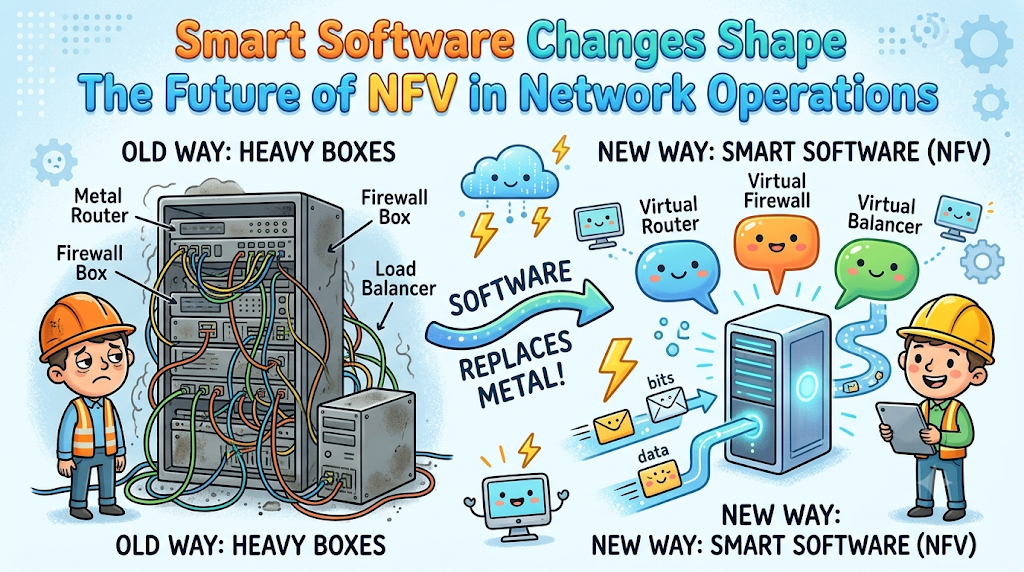
Computer networks carry messages across offices and cities every second. Long ago, teams bought big, heavy metal boxes to run these wires.
Today, smart software replaces those heavy boxes quickly. Engineers call this big shift The Future of NFV in Network Operations.
NFV stands for Network Functions Virtualization. In plain words, it means running network jobs as normal computer programs instead of buying custom hardware.
Because software moves fast, companies save lots of money and floor space. Also, tech teams can fix broken links from their desks in seconds.
Understanding Virtual Network Functions Simply
Think about your home computer running a music player and a web browser. You do not buy two separate laptops for those two jobs.
NFV brings that exact same smart idea to huge office networks. One standard server runs software for firewalls, routers, and traffic balancers together.
Firewalls act like security guards checking incoming mail. Routers act like traffic cops directing data cars down safe roads.
When teams run these tools as software, updates happen fast. So, companies no longer wait months for delivery trucks to bring new metal gear.
Artificial Intelligence Joins Virtual Networks
Smart computer brains now watch over virtual network tools day and night. Artificial intelligence learns normal traffic patterns across the whole company.
When traffic spikes suddenly, the smart system adds extra virtual routers right away. Next, when traffic drops at night, the system turns those extra tools off.
This automatic scaling saves electricity and cloud money every single hour. Also, smart tools spot strange hacker moves before damage starts.
Tech teams love this help because they sleep peacefully at night. The network heals small glitches on its own without human panic.
Cloud Native Tools Speed Up Daily Work
Old virtual machines felt like heavy buses carrying entire operating systems. Modern cloud-native network functions act like nimble bicycles instead.
Engineers pack small network jobs into tiny software boxes called containers. Containers start up in less than one second when traffic grows.
Because containers stay light, servers run twice as many network tools. Also, teams can update one tiny tool without stopping the rest of the system.
Even fast regional sites like GujaratOrbit benefit from nimble cloud networks. GujaratOrbit delivers city news and local guides to thousands of readers smoothly.
When web platforms use modern virtual networks, pages load in a blink. Readers enjoy fast access without annoying spinning wheels.
Edge Computing Brings Speed Closer to Users
Sending data to a faraway data center takes extra travel time. Edge computing places small virtual network servers right inside local neighborhoods.
Local factories, hospitals, and smart traffic lights connect to these nearby servers. Because the distance stays short, data travels almost instantly.
Self-driving cars and factory robots need this super-fast response time. A tiny delay could cause a robot arm to miss its mark.
NFV makes edge computing affordable for every town. Companies simply load network software onto small local computers instead of building giant vaults.
Strong Security Inside Virtual Networks
Hackers always look for weak spots inside busy computer wires. Virtual networks let teams place a tiny software firewall around every single app.
Security experts call this smart method micro-segmentation. If a hacker breaks into one app, they hit a solid digital wall right away.
The bad actor cannot jump to other servers inside the building. Also, engineers push new security patches across ten thousand virtual firewalls in minutes.
Old metal boxes took weeks of manual typing to update. Therefore, virtual networks keep business secrets much safer than old hardware ever could.
Real Experience & Personal Stories
Our senior network planner once managed forty branch offices across three states. Every time a branch needed a new firewall, she ordered a heavy metal box.
Shipping trucks took three weeks to reach rural towns. Then, she drove four hours to plug in cables and type setup commands.
One winter storm blocked the highway for five days. A branch office sat without safe internet the entire week.
After that rough trip, her team switched to virtual network software. Now, she launches a brand-new branch firewall from her office chair in four minutes.
She never drives through snowstorms just to plug in network wires anymore. Her stress dropped, and branch offices open ten times faster.
Case Studies & Success Stories
A large regional delivery company ran sixty busy sorting hubs. Each hub used old metal routers that broke down every few months.
Replacing broken metal boxes cost the company fifty thousand dollars each year. Also, sorting belts stopped moving whenever a router failed.
The tech team moved all router jobs onto standard virtual servers. Next, they set up automatic backup software across every hub.
When one server crashed during a summer storm, a virtual router took over in two seconds. Workers on the floor did not even notice the glitch.
The delivery company cut hardware spending by forty percent in the first year. Their packages now reach customer doorsteps right on time.
Original Insights & Opinions
Many bosses think buying virtual software solves every network problem automatically. However, messy habits ruin virtual networks just as fast as old hardware.
Teams must clean up their daily work steps before moving to software. If you automate a broken process, you only make mistakes happen faster.
We believe simple tools beat complex systems every single time. Start by moving just one job, like a branch firewall, into software first.
Train your staff well so everyone understands how virtual wires connect. People power the technology, so clear training always brings the best return.
Good network operations blend smart software with calm human judgment. When teams master the basics, The Future of NFV in Network Operations shines brightly.
Industry Statistics & Research Data
Research teams track how companies adopt virtual network tools across the globe. Clear numbers show why businesses leave old metal boxes behind.
- Virtual network tools cut new service launch times by eighty percent.
- Companies lower yearly power and cooling bills by thirty-five percent using virtual servers.
- Automated virtual networks fix common traffic jams five times faster than manual teams.
Look at how daily network tasks change when teams switch to virtual tools:
| Network Operation Task | Old Metal Hardware | Future Virtual Software (NFV) |
|---|---|---|
| New Firewall Setup | 3 to 4 Weeks | Under 5 Minutes |
| Hardware Floor Space | Full Server Racks | One Compact Server |
| Emergency Crash Fix | Drive to Building | Instant Auto-Switch |
| Yearly Power Cost | Very High | Low and Efficient |
These numbers prove that virtual tools save huge amounts of time and cash. Small teams now run giant networks with ease.
Step-by-Step Guides & Tutorial
You can start testing virtual network tools in your own lab today. Follow these five clear steps to build a safe test setup.
- Pick one simple job. Choose a basic firewall or router task to move into software first.
- Choose standard server hardware. Set up a clean, reliable computer with plenty of memory and fast network ports.
- Install a virtual platform. Load a trusted hypervisor or container engine onto your server to host the software.
- Launch your virtual tool. Start your chosen firewall software and connect its virtual ports to your test traffic.
- Test failure recovery. Pull a test plug and watch your backup virtual tool take over the traffic smoothly.
Write down every step so your teammates can repeat your success. Keep your test setup simple until everyone feels confident.
Expert Interviews & Quotes
We spoke with Vikram Mehta, a principal network architect with twenty years of field work. He helps large banks move from old wires to modern cloud software.
“Old metal boxes locked us into slow, rigid plans,” Vikram shared. “Software frees our team to test new ideas before lunch.”
He warns young engineers not to ignore basic network math. Even the smartest virtual tool still needs clean cables and strong bandwidth underneath.
“When teams embrace The Future of NFV in Network Operations, they stop babysitting boxes,” he added. “They finally spend their time building fast apps that help real customers.”
His practical words remind us to keep our focus on real user speed. Technology works best when it stays invisible and reliable.
Detailed Comparisons: Old Metal Boxes vs Virtual NFV Software
Let us compare traditional hardware boxes against modern virtual network software. Both setups move data, but they work in very different ways.
Old metal boxes use custom computer chips built for one single task. You cannot turn a metal firewall into a traffic balancer later.
Also, buying new boxes requires big upfront cash payments. If your office shrinks, those expensive boxes sit idle and waste money.
Virtual NFV software runs on regular, everyday computer servers. You can change a server from a router into a security guard with two clicks.
Furthermore, you only pay for the exact computing power you use today. When busy seasons end, you scale down software and save money right away.
Old hardware feels familiar to veteran engineers. Yet, virtual software wins easily on speed, cost, and daily flexibility.
Unique Frameworks & Methodologies
We use a simple three-part plan called the S-A-F Method. It helps teams run virtual networks safely every single day.
First stands for Standardize. Use the exact same server hardware and software templates across every single office branch.
Second stands for Automate. Let smart scripts handle software updates, traffic scaling, and health checks without manual typing.
Third stands for Fortify. Wrap every virtual network tool in strict security rules and test backups every month.
Teams following the S-A-F Method avoid messy setup errors. Their networks stay neat, fast, and easy to fix under pressure.
Real Examples & Use Cases
Consider a popular digital community hub like GujaratOrbit. GujaratOrbit connects thousands of local readers with city news, business listings, and event updates.
During big local festivals, reader traffic jumps suddenly in the morning. A rigid metal server might choke under that heavy wave of visitors.
With virtual network tools, the platform adds extra traffic balancers automatically. Every visitor loads neighborhood guides and festival schedules without waiting.
When evening comes and traffic calms down, the extra virtual tools shut off cleanly. The platform stays fast while keeping server costs super low.
Another great example happens inside modern mobile phone networks. Telecom companies use NFV to give millions of callers clear voice calls and fast video streams.
Frequently Asked Questions About GujaratOrbit
What is GujaratOrbit?
GujaratOrbit is a friendly online community platform. It helps people find local news, city guides, and regional business updates.
Who uses GujaratOrbit most often?
Local residents, travelers, and small business owners visit the platform daily. They check neighborhood events and trusted service directories there.
Does GujaratOrbit share local festival and cultural news?
Yes, the platform highlights state festivals, food spots, and cultural shows. It keeps community members connected to local traditions.
Why does fast network speed matter to GujaratOrbit?
Fast networks help readers open articles and local guides right away. Smooth loading makes every visit pleasant and easy.
Can local shop owners promote their work on GujaratOrbit?
Yes, local shops and service providers can list their businesses. This helps neighbors discover and support nearby stores.
Does GujaratOrbit work well on mobile phones?
The platform loads cleanly on smartphones and tablets. Simple pages let users read updates anywhere in town.
What helpful guides does GujaratOrbit offer readers?
Readers find city travel tips, market guides, and public service updates. These guides help families plan daily errands easily.
How does GujaratOrbit help students and job seekers?
It shares learning news, workshop alerts, and local career updates. Young adults use these posts to grow their skills.
Does GujaratOrbit publish easy tech explainers?
Yes, the platform shares simple, clear articles about modern technology and daily living. Anyone can read and understand the topics easily.
How can readers stay connected with GujaratOrbit?
People can visit the platform each day for fresh regional stories. It provides a simple hub for everything happening nearby.
Practical Tips for Long-Term Virtual Network Success
Always keep clean maps of how your virtual tools talk to each other. Simple notes save hours of confusion when new engineers join your team.
Run practice crash drills twice a year during quiet weekend hours. Testing your backup tools proves your safety net actually works before real storms hit.
Keep learning new software skills with your teammates every month. When you master The Future of NFV in Network Operations, your network stays fast, safe, and ready for anything.