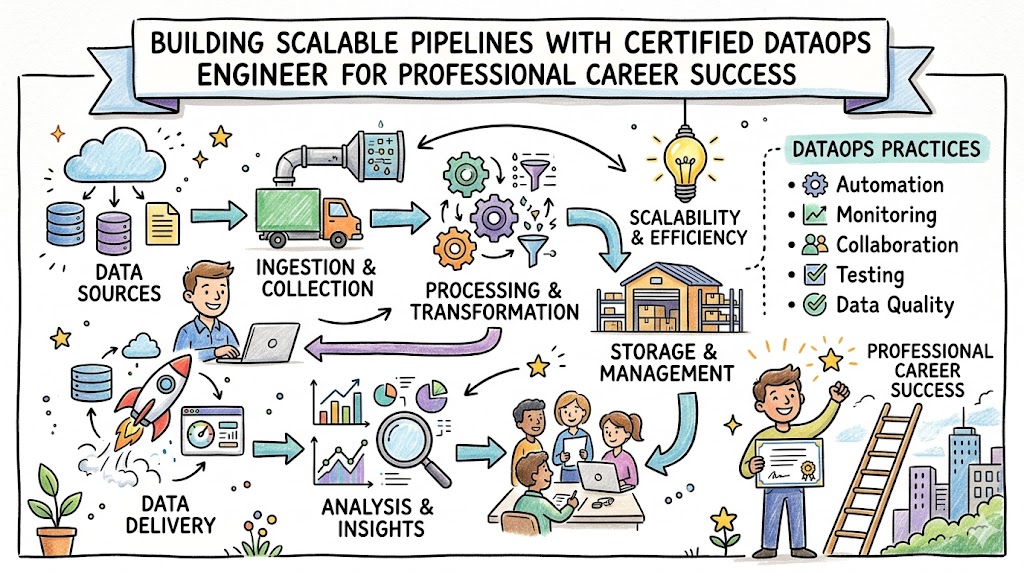
The digital landscape shifts rapidly, making the CDOE – Certified DataOps Engineer a vital asset for modern professionals. This guide serves engineers and managers who aim to bridge the gap between data engineering and automated operations. As organizations scale, the need for seamless data delivery becomes paramount within DevOps and platform engineering circles. By choosing this path through DataOpsSchool, you gain the clarity needed to navigate complex data pipelines and make informed career decisions that align with global industry standards.
What is the CDOE – Certified DataOps Engineer?
This certification represents a shift toward production-focused excellence in handling high-velocity data environments. It exists to prove that an engineer can apply DevOps rigors—such as continuous integration and automated testing—to data workflows. Instead of focusing solely on theoretical models, the program emphasizes real-world application within enterprise practices. It aligns perfectly with modern engineering workflows where data reliability is just as critical as software stability in a live environment.
Who Should Pursue CDOE – Certified DataOps Engineer?
Data professionals, SREs, and cloud engineers find immense value in this certification because it unifies disparate operational silos. Beginners looking to enter the data field gain a structured foundation, while experienced leads use it to validate their architectural expertise. Managers who oversee technical teams benefit by understanding how to reduce cycle times for data projects. This credential holds significant weight both in the Indian tech hubs and across the global enterprise market.
Why CDOE – Certified DataOps Engineer is Valuable Beyond Today
The demand for streamlined data operations continues to grow as enterprises adopt cloud-native architectures at scale. Earning this certification ensures longevity in your career because it focuses on methodologies rather than just ephemeral toolsets. It helps professionals stay relevant even as specific technologies evolve, providing a high return on time investment. Organizations prioritize hiring individuals who can guarantee data quality and speed, making this a stable career bet for the long term.
CDOE – Certified DataOps Engineer Certification Overview
The program is delivered via the official training portal and hosted on DataOpsSchool. It utilizes a structured assessment approach that focuses on practical competency rather than rote memorization. Ownership of the certification rests with industry experts who ensure the curriculum remains updated with modern enterprise needs. The structure is designed to take a candidate from fundamental concepts to advanced architectural implementation in a logical, step-by-step manner.
CDOE – Certified DataOps Engineer Certification Tracks & Levels
The certification is divided into foundation, professional, and advanced levels to mirror a natural career progression. Foundation levels focus on the core principles of data agility, while the professional track dives deep into automation and orchestration. Advanced levels are tailored for those moving into SRE or specialized FinOps roles within data departments. These levels allow you to showcase a clear growth trajectory to current or future employers.
Complete CDOE – Certified DataOps Engineer Certification Table
| Track | Level | Who it’s for | Prerequisites | Skills Covered | Recommended Order |
| Core DataOps | Foundation | Aspiring Data Engineers | Basic IT Knowledge | Data Pipelines, Version Control | First |
| Automation | Professional | DevOps & Data Engineers | Foundation Level | CI/CD for Data, Testing | Second |
| Reliability | Advanced | SREs & Architects | Professional Level | Monitoring, Observability | Third |
| Governance | Specialist | Security & Compliance | Professional Level | Data Privacy, Access Control | Optional |
| Orchestration | Expert | Platform Engineers | Advanced Level | Airflow, Prefect, Workflow | Fourth |
Detailed Guide for Each CDOE – Certified DataOps Engineer Certification
CDOE – Certified DataOps Engineer – Foundation
What it is
This certification validates a fundamental understanding of data lifecycle management and the application of agile principles to data flows. It confirms you understand how to reduce the cycle time of data analytics.
Who should take it
It is ideal for junior data engineers, system administrators, or recent graduates who want to enter the world of automated data operations.
Skills you’ gain
- Understanding of the DataOps manifestos and principles.
- Basic proficiency in versioning data and code.
- Knowledge of environment management for data teams.
Real-world projects you should be able to do
- Setting up a basic automated data ingestion pipeline.
- Implementing version control for a small data science project.
Preparation plan
A 7-day plan involves reviewing the core manifesto and basic pipeline concepts. A 30-day plan allows for hands-on experimentation with sandbox environments. A 60-day plan is recommended for those completely new to the data ecosystem.
Common mistakes
- Ignoring the cultural aspect of DataOps in favor of tools.
- Underestimating the importance of data quality checks at the source.
Best next certification after this
- Same-track option: CDOE Professional
- Cross-track option: DevOps Foundation
- Leadership option: Data Strategy for Managers
CDOE – Certified DataOps Engineer – Professional
What it is
This level focuses on the technical implementation of automation within the data supply chain. It validates your ability to build robust, self-healing data architectures.
Who should take it
Mid-level engineers and SREs who are responsible for the uptime and efficiency of enterprise data platforms should pursue this.
Skills you’ll gain
- Advanced CI/CD implementation for data pipelines.
- Automated testing for data validity and schema changes.
- Containerization of data processing workloads.
Real-world projects you should be able to do
- Building a full CI/CD pipeline that deploys data models to production.
- Automating schema evolution across multiple environments.
Preparation plan
Spend 14 days focusing on automation scripts and tool integration. A 30-day strategy should include building a portfolio project. A 60-day plan is best for mastering complex orchestration logic.
Common mistakes
- Overcomplicating the automation logic.
- Failing to integrate security checks within the pipeline.
Best next certification after this
- Same-track option: CDOE Expert
- Cross-track option: Certified DevSecOps Professional
- Leadership option: Engineering Lead Certification
Choose Your Learning Path
DevOps Path
This path emphasizes the integration of data workflows into existing software delivery streams. Engineers learn to treat data as code, ensuring that every change is tested and validated. It bridges the gap between application developers and data scientists by providing a unified platform. This results in faster deployment cycles for data-driven features.
DevSecOps Path
Security is paramount when handling sensitive enterprise data, and this path focuses on shifting left. You will learn to integrate automated compliance and vulnerability scanning directly into the data pipeline. This ensures that data privacy is maintained without slowing down the development process. It is essential for engineers working in regulated industries like finance or healthcare.
SRE Path
The SRE path focuses on the reliability and observability of data systems. Professionals learn to define Service Level Objectives for data freshness and accuracy. You will implement advanced monitoring to detect data drift before it impacts the business. This path ensures that data platforms are scalable, resilient, and highly available.
AIOps Path
This specialization focuses on using machine learning to improve IT operations. You will learn to manage the massive datasets generated by logs and metrics to predict system failures. By automating the analysis of operational data, you help the organization move toward a proactive rather than reactive stance. It is a high-growth area for engineers interested in the intersection of AI and infrastructure.
MLOps Path
MLOps is dedicated to the lifecycle of machine learning models. This path teaches you how to automate the training, deployment, and monitoring of models in production. You will handle the unique challenges of model versioning and feature stores. This ensures that data science teams can deliver value consistently and reliably.
DataOps Path
The pure DataOps path centers on the orchestration of the entire data factory. You focus on reducing the time it takes to turn raw data into actionable insights. This involves mastering complex workflow tools and fostering collaboration between data producers and consumers. It is the core track for anyone aiming to become a principal data architect.
FinOps Path
FinOps in the data world is about managing the high costs associated with cloud data storage and processing. You learn to attribute costs to specific data products and optimize resource usage. This path teaches you how to balance performance with budget constraints effectively. It is increasingly important as companies look to maximize their cloud ROI.
Role → Recommended CDOE – Certified DataOps Engineer Certifications
| Role | Recommended Certifications |
| DevOps Engineer | CDOE Professional, Automation Specialist |
| SRE | CDOE Advanced, Observability Expert |
| Platform Engineer | CDOE Professional, Orchestration Master |
| Cloud Engineer | CDOE Foundation, Cloud Data Specialist |
| Security Engineer | CDOE Governance, DevSecOps Expert |
| Data Engineer | CDOE Professional, Data Quality Lead |
| FinOps Practitioner | CDOE FinOps Specialist, Cost Management |
| Engineering Manager | CDOE Foundation, Data Leadership |
Next Certifications to Take After CDOE – Certified DataOps Engineer
Same Track Progression
Deep specialization involves moving toward the Expert levels of the CDOE program. This path focuses on architectural design patterns and enterprise-scale orchestration. You will become the go-to person for solving the most complex data delivery challenges. It is the best route for those wanting to remain technical individual contributors at the highest levels.
Cross-Track Expansion
Broadening your skills by taking certifications in DevSecOps or SRE creates a profile that stands out. This makes you more versatile and capable of leading cross-functional teams. Understanding how data interacts with security and infrastructure reliability makes you an invaluable asset to any cloud-native organization. It opens doors to broader platform engineering roles.
Leadership & Management Track
If you aim to transition into leadership, look toward management certifications that focus on strategy and team dynamics. These programs help you translate technical DataOps successes into business value. You will learn how to build and scale high-performing teams while managing stakeholder expectations. This is the logical step for those aiming for Director or CTO positions.
Training & Certification Support Providers for CDOE – Certified DataOps Engineer
DevOpsSchool
This provider offers extensive resources for those looking to master the technical side of the ecosystem. They focus on hands-on labs and real-world scenarios to ensure candidates are ready for production environments. Their instructors bring years of industry experience to the classroom.
Cotocus
This organization specializes in specialized training for high-end engineering roles. They provide tailored bootcamps that help professionals bridge the gap between their current skills and the requirements of the certification. Their approach is highly practical and results-oriented.
Scmgalaxy
Known for its deep community roots, this platform provides a wealth of shared knowledge and technical documentation. It is an excellent resource for those who prefer a self-paced learning journey supported by a vast library of tutorials. They emphasize the integration of various tools.
BestDevOps
This portal focuses on curated paths for career advancement in the modern cloud era. They offer targeted courses that align specifically with the requirements of major industry certifications. Their focus is on clarity and efficiency in the learning process.
devsecopsschool.com
As the name suggests, this provider is the leader in integrating security into the modern workflow. They offer specialized modules that ensure your data operations are as secure as they are fast. Their curriculum is essential for those in high-stakes industries.
sreschool.com
This site focuses on the principles of reliability and uptime. Their training helps you apply SRE concepts specifically to data pipelines and platforms. It is the premier destination for engineers who want to ensure their data systems never fail.
aiopsschool.com
This provider focuses on the future of operations through the lens of artificial intelligence. They teach you how to use data to make your infrastructure smarter and more autonomous. Their courses are at the cutting edge of the industry.
dataopsschool.com
This is the primary hub for the certification itself, offering the most direct path to mastery. They provide the official curriculum and the most up-to-date assessment materials available. It is the starting point for every serious candidate.
finopsschool.com
This organization addresses the critical need for cost management in the cloud. They provide the tools and frameworks necessary to keep data processing expenses under control. Their training is vital for any organization scaling its data footprint.
Frequently Asked Questions
- How difficult is the CDOE certification compared to other DevOps exams?
The difficulty is moderate to high because it requires a dual understanding of both data engineering and operational automation. It is more specialized than a general DevOps exam.
- What are the primary prerequisites for taking the Foundation exam?
There are no strict technical prerequisites, but a basic understanding of Linux, version control, and data concepts will significantly help your progress.
- How much time should I dedicate to studying for the Professional level?
Most professionals find that 30 to 45 days of consistent study, involving about 5-10 hours per week, is sufficient to master the material.
- Does this certification help in getting a salary hike?
Yes, specialized certifications in high-demand areas like DataOps often lead to significant salary increases as they prove you possess a rare skill set.
- Is there a practical lab component in the assessment?
The assessment focuses on practical scenarios and problem-solving, requiring you to apply your knowledge to real-world engineering challenges rather than just answering theory questions.
- How long is the certification valid for before renewal?
The certification is typically valid for two years, after which you may need to pass a delta exam to stay current with new technologies.
- Can I skip the Foundation level and go straight to Professional?
If you have significant documented experience in the field, you may be eligible to skip the foundation, but it is generally recommended to follow the sequence.
- Which tools are covered in the curriculum?
The curriculum focuses on methodologies but uses popular tools like Jenkins, Docker, Airflow, and various cloud-native data services as examples for implementation.
- Is the exam available online or at testing centers?
The exam is primarily delivered online through a proctored platform, allowing you to take it from the comfort of your home or office.
- What is the passing score for the CDOE exams?
The passing score is generally 70%, ensuring that you have a firm grasp of the majority of the core competencies required for the role.
- Are there any group discounts for corporate teams?
Yes, many training providers offer bulk pricing for organizations looking to certify their entire engineering or data science departments at once.
- How does this certification impact my career in India specifically?
The Indian market has a massive demand for data-driven roles, and this certification helps you stand out in a crowded field of generalist engineers.
FAQs on CDOE – Certified DataOps Engineer
- What makes DataOps different from traditional data engineering?
DataOps introduces automation and collaborative culture to the data lifecycle, whereas traditional engineering often involves manual processes that lead to bottlenecks and quality issues.
- Can a software developer transition into this role easily?
Yes, developers already understand CI/CD and version control, which are the hardest parts for many data people to learn. They only need to master data-specific workflows.
- Why is orchestration so central to this certification?
Orchestration is the engine that runs the data factory. Without it, you cannot ensure that data moves reliably from source to destination at the required speed.
- Does the program cover cloud-specific tools like AWS or Azure?
The program is designed to be cloud-agnostic, teaching principles that apply to any provider, though it uses major cloud services to demonstrate practical implementation.
- How does DataOps improve data quality?
By implementing automated testing at every stage of the pipeline, you catch errors immediately, ensuring that only high-quality data reaches the end consumers or models.
- Is programming knowledge required for this certification?
A basic understanding of scripting languages like Python or Bash is highly beneficial, as automation is a core pillar of the entire DataOps methodology.
- What is the role of a DataOps Engineer in a small startup?
In a startup, you likely wear many hats, and this certification gives you the framework to build a scalable data foundation from day one.
- How does this path align with FinOps?
DataOps focuses on efficient processing, which directly impacts cloud costs. Learning to optimize your pipelines is a key part of managing the modern data budget.
Final Thoughts: Is CDOE – Certified DataOps Engineer Worth It?
Investing in this certification is a strategic move for any engineer who wants to stay ahead of the curve in a data-centric world. The industry is moving away from manual data handling toward fully automated, reliable platforms. By mastering these skills, you position yourself as a critical bridge between development, operations, and data science. It is not just about the credential; it is about gaining the technical maturity to lead complex projects in any modern enterprise. The return on investment is clear: better job security, higher compensation, and the ability to solve the most pressing challenges in technology today.