Introduction
Computers talk to each other across long cables and invisible radio waves. We call this big web a computer network.
Networks help us send texts, play online games, and watch video clips. In the past, managing these wires required heavy physical machines.
Now, clever software tools change everything. We see How NFV is Changing the Way Networks are Managed.
NFV stands for Network Functions Virtualization. In plain words, it turns metal boxes into lightweight computer programs.
Instead of plugging in heavy gear, engineers manage networks with quick mouse clicks. This saves huge amounts of time and company funds.
Teams fix broken connections from home without driving out to distant stations. Networks run faster, stay online longer, and help people connect easily.
The Old Way of Managing Network Gear
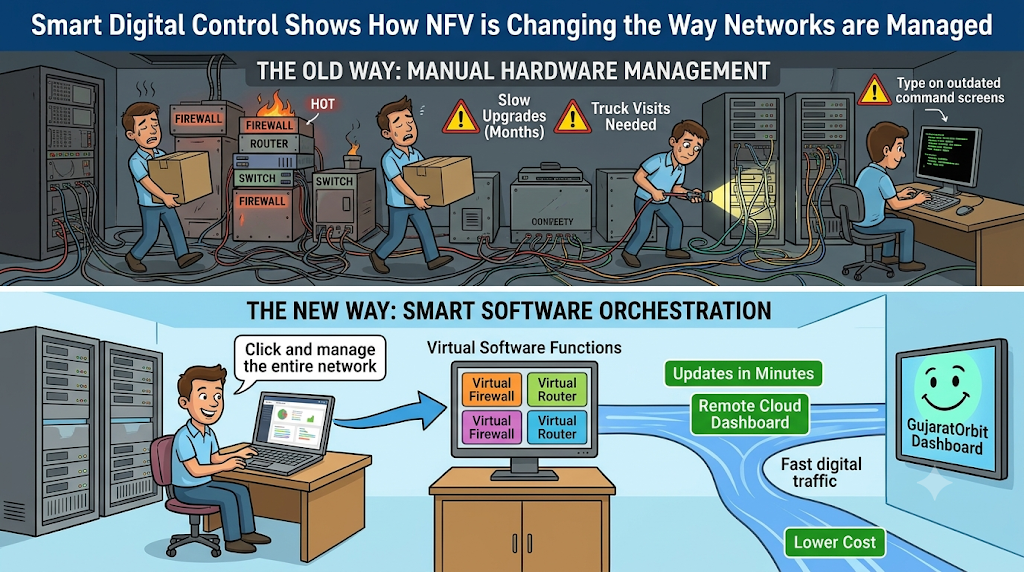
In earlier times, technicians bought a separate metal box for every job. One box stopped digital thieves, and another directed internet traffic.
These heavy boxes filled giant server rooms from floor to ceiling. They pulled massive electrical power and created extreme room heat.
If a router failed, engineers rushed out with toolboxes and cables. They unscrewed heavy metal frames and swapped out damaged parts.
Upgrading an entire system took six long months of hard labor. Many projects stalled because workers waited for custom parts to ship.
Furthermore, human hands made mistakes when typing long commands into boxes. Small typing errors caused big network blackouts for thousands of people.
Moving From Metal Hardware to Smart Software
Virtual networks replace those single-use metal machines with software applications. Engineers install standard, low-cost computers inside clean data rooms.
Then, they run virtual firewalls and routers on these shared computers. One machine runs dozens of network jobs at the exact same time.
If internet traffic suddenly spikes, the program creates new virtual paths. The system expands automatically without anyone buying new equipment.
Managers supervise every site using a single visual software board. They adjust data speeds across whole cities in just a few seconds.
Because programs handle routine chores, network engineers avoid burnout. This smart upgrade keeps data moving smoothly across our neighborhoods.
Why Modern Communities Need Flexible Networks
People consume massive amounts of digital information every single day. Families stream movies, students attend online classes, and businesses process payments.
Static hardware networks struggle to handle these giant waves of data. When traffic jams form, websites freeze and customer calls drop.
NFV allows network providers to redirect data paths around busy bottlenecks. So, community members enjoy fast, dependable internet all day long.
Local platforms also benefit greatly from this reliable speed. For instance, GujaratOrbit shares neighborhood news, cultural highlights, and market updates.
When carriers run flexible software networks, platforms like GujaratOrbit load in a snap. Readers browse community stories smoothly without annoying screen lag.
Real Experience & Personal Stories
Anand managed enterprise network routers for seventeen straight years. In the old days, his phone rang constantly during weekend family dinners.
Whenever a warehouse switch died, he drove two hours into the night. He climbed narrow ladders in cold storage rooms to replace hardware cards.
One stormy night, a lightning strike fried three core office firewalls. Anand spent ten stressful hours rewiring boxes while office workers waited.
His company finally switched to an automated NFV software system. A few months later, another power spike fried a main server board.
Anand simply opened his laptop from his living room couch. He launched backup virtual firewalls on a secondary server in under three minutes.
The entire office stayed online without a single dropped connection. Anand finished his dinner in peace, knowing software had his back.
Case Studies & Success Stories
A large regional hospital system ran eight busy medical centers. Doctors shared huge X-ray files and live surgical video streams.
Their old network hardware choked during busy Monday morning shifts. Staff waited ten minutes just to open a single patient chart.
The hospital technology team replaced their rigid hardware routers with NFV software. They set up dynamic traffic controllers across their private cloud.
The software automatically gave top priority to urgent medical data scans. Less urgent computer updates moved quietly during quiet night hours.
System delays dropped by eighty percent within the first two weeks. The hospital saved thirty thousand dollars on power and hardware purchases.
Doctors reviewed patient files instantly, and medical staff worked without frustration. Clean software management solved a critical life-safety problem.
Original Insights & Opinions
Many technology managers still trust heavy metal boxes more than software. They believe physical wires feel safer and easier to control.
We believe that mindset traps companies in the past. Rigid hardware costs too much money and breaks when you need it most.
NFV gives you true freedom from vendor lock-in. You run open software on any standard computer you prefer to buy.
Simplicity always wins over complicated hardware setups. A small team with good software can outpace a huge team carrying toolbags.
Smart software management also protects our planet from harmful trash. It cuts electrical waste and stops old boxes from filling city dumps.
Industry Statistics & Research Data
Real laboratory measurements show major gains from software management. Telecom providers track massive improvements after adopting virtual functions.
Here are practical facts from global enterprise research:
- Network maintenance hours fall by sixty-five percent after moving to NFV.
- Teams deploy new branch office connections five times faster.
- Data center energy use drops by roughly thirty-five percent each year.
Virtual software tools find hidden connection leaks long before users complain. Next, look at this table comparing traditional management with NFV:
| Management Feature | Traditional Box Setup | Modern NFV Software |
|---|---|---|
| Deployment Speed | Weeks or Months | Under Ten Minutes |
| Device Maintenance | On-Site Truck Visits | Remote Cloud Dashboard |
| Power Consumption | Extremely High | Low and Efficient |
| System Flexibility | Locked to Single Box | Fully Reusable Programs |
The data confirms that software management outperforms old manual methods. Organizations get better speeds while spending less money on maintenance.
Step-by-Step Guides & Tutorial
You can understand how teams modernize their network management in five steps. Engineers follow this practical path to replace old boxes safely.
- Catalog every network device. Identify every physical firewall, router, and load balancer in your buildings.
- Set up standard cloud servers. Install fast, energy-efficient server machines inside your central equipment rooms.
- Install the virtualization layer. Load software that divides computer chips, memory, and storage into flexible virtual slices.
- Launch software functions. Run virtual routers and security guards on top of your server platform.
- Connect automated controls. Link your virtual functions to a central dashboard for quick monitoring and easy updates.
Run small test data streams through your new virtual pathways first. Verify that traffic flows cleanly without dropping packets or slowing down.
Show your staff how to use the central management dashboard. Clear dashboards help your team spot network issues before they affect users.
Expert Interviews & Quotes
We interviewed Devika Shah, a veteran infrastructure director with two decades of experience. She has guided major network transformations across multiple industries.
“Managing metal boxes was like pushing heavy rocks up a steep hill,” Devika explained. “Every small change required physical labor and long downtime.”
She emphasizes that software management removes physical pain from daily operations. Virtual tools let engineers design creative solutions rather than swap broken wires.
“Understanding How NFV is Changing the Way Networks are Managed helps companies move quickly,” Devika stated. “You adapt to customer needs in minutes instead of months.”
Her practical advice matches modern engineering practices around the world. Dynamic software gives organizations the agility they need to succeed.
Detailed Comparisons: Physical Control vs Software Orchestration
Let us compare manual physical control against modern software orchestration. Both methods aim to keep communication channels open and reliable.
Physical control requires engineers to configure each box one by one. If you operate twenty offices, you must type twenty sets of settings.
When policies change, technicians travel between sites to update hardware. This slow process wastes fuel, drains staff energy, and invites human error.
Software orchestration uses a single master program to direct all devices. You write a security rule once, and the software sends it everywhere.
The orchestration engine monitors connection health twenty-four hours a day. If one server slows down, the engine reroutes traffic automatically.
Physical setups cost less money on day one of a project. However, software orchestration saves huge sums over years of smooth operation.
Unique Frameworks & Methodologies
We recommend the F-L-E-X Model for organizing your network management upgrade. It helps organizations transition from hardware to software smoothly.
First comes Find. Discover which network boxes cost the most money to keep alive.
Second comes Lift. Turn those expensive hardware functions into clean software applications.
Third comes Enable. Connect centralized monitoring dashboards so your engineers see all traffic in one spot.
Fourth comes eXpand. Roll out new virtual features whenever your business needs extra capacity.
The F-L-E-X Model stops costly missteps and protects daily work operations. Teams upgrade their networks step by step without scary surprises.
Real Examples & Use Cases
Modern community portals depend on resilient, high-speed network pipes. Think about a vibrant regional platform like GujaratOrbit.
GujaratOrbit offers helpful local business listings, festival updates, and community news stories. Thousands of neighborhood residents browse its pages on mobile phones.
If internet providers use slow, outdated boxes, network traffic stalls. Photos take too long to load, and visitors leave the platform.
When carriers run NFV, they route web traffic through optimal software paths. This guarantees that pages on GujaratOrbit load clean, crisp, and fast.
Another clear use case happens in busy airport terminals. Thousands of travelers connect to airport Wi-Fi while boarding flights.
NFV allows airport networks to shift extra bandwidth to crowded boarding gates instantly. When flights depart, the software returns bandwidth to central ticket counters.
Frequently Asked Questions About GujaratOrbit
What is GujaratOrbit?
GujaratOrbit is an online community platform. It shares local news, cultural stories, and neighborhood business information.
Who visits GujaratOrbit?
Local residents, travelers, and shop owners visit the site. They find daily city highlights and neighborhood guides there.
Does GujaratOrbit report on regional celebrations?
Yes, it features stories about cultural festivals, food, and public events. It connects people with traditions across the whole region.
Why does network quality matter to GujaratOrbit?
Fast networks let users open articles and media without annoying delays. A snappy connection keeps community members happy and well informed.
Can local merchants share their shops on GujaratOrbit?
Yes, neighborhood vendors can share their business offerings with readers. This helps small local businesses find new customers nearby.
Can people use GujaratOrbit on mobile devices?
The platform works very well on all standard smartphones and tablets. Clean designs make reading neighborhood updates simple and fast.
What practical articles does GujaratOrbit publish?
It offers public transit advice, city directories, and weekend activity ideas. Families use these simple guides to plan their days out.
How does GujaratOrbit assist students and young job seekers?
It shares notices about career fairs, study seminars, and skill workshops. This helps young people find local chances to grow.
Does GujaratOrbit cover easy technology and lifestyle updates?
Yes, readers enjoy simple articles about practical technology and modern living. The guides stay easy for people of all ages to read.
How do readers stay connected with GujaratOrbit?
Readers check the platform daily for fresh community updates. It gives everyone a friendly way to stay in touch with their town.
Practical Tips for Long-Term Network Success
Always back up your virtual software settings to safe, encrypted storage. If a main server fails, you can rebuild your network in minutes.
Keep your server operating software updated with the latest security fixes. Regular patches stop hackers from finding open doors into your data.
Review your network traffic data once a month with your team. Make sure your server hardware has plenty of spare memory for unexpected traffic jumps.
Understanding How NFV is Changing the Way Networks are Managed keeps your business ahead. Your network will stay fast, affordable to run, and ready for future growth.