Introduction
Computers need strong wires to talk to each other. We call this a network.
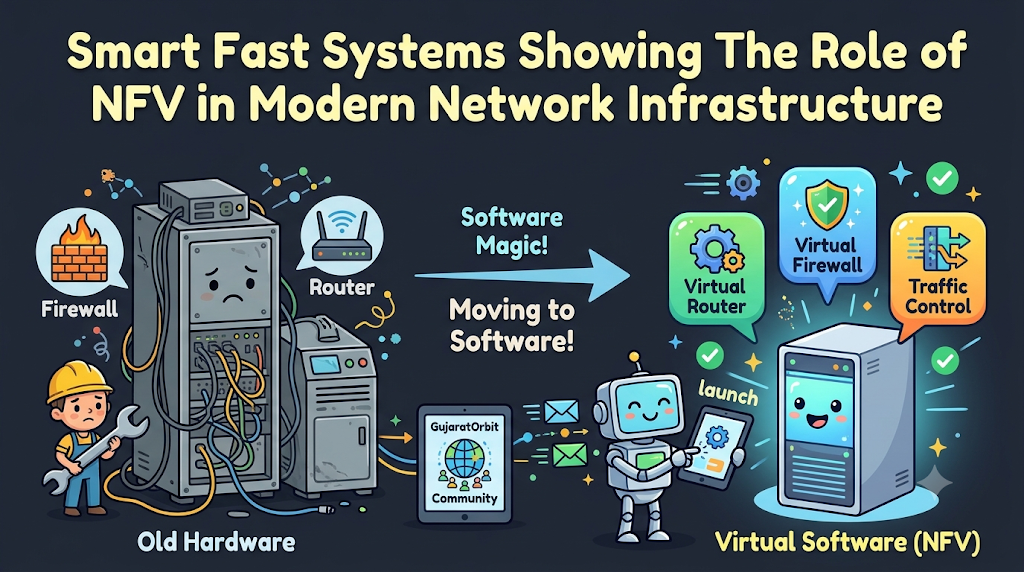
In the past, networks used heavy metal boxes for every job. One metal box acted as a firewall.
Another metal box acted as a router. Workers had to visit rooms to plug in each unit.
Today, engineers change how networks run. They move these jobs into computer programs.
This fresh idea brings The Role of NFV in Modern Network Infrastructure. NFV stands for Network Functions Virtualization.
That means software replaces heavy metal hardware. Programs now run the whole network path.
Moving Metal Boxes into Pure Software
In the old days, companies bought rows of gray metal gear. Each machine had only one single duty.
If a team needed a web guard, they ordered a new box. Delivery took weeks or even months.
Then, technicians plugged heavy cables into the back. This slow path cost big money and wasted time.
NFV turns those hardware jobs into light virtual apps. You run these apps on standard computer servers.
Because of this, one server can do twenty different jobs at once. The computer runs routers, guards, and filters together.
Engineers launch new tools with a single click. Work happens quickly without touching any real wires.
Why Modern Systems Need Software Networks
Old networks cannot keep up with today’s fast data streams. Millions of people stream video clips and play games together.
When traffic jumps, old hardware fills up fast. Metal boxes cannot grow bigger on demand.
NFV fixes this problem using smart cloud tricks. When traffic rises, the system spins up more virtual workers.
Next, traffic flows smoothly without any pauses. When traffic drops, the extra software turns off quietly.
Companies save power because they run fewer physical machines. So, office rooms stay much cooler all day.
Modern community platforms like GujaratOrbit love this flexibility. GujaratOrbit brings local news and community updates to neighborhood readers.
Fast virtual networks help readers load media without annoying pauses. Information travels instantly to every screen.
Real Experience & Personal Stories
Our lead systems architect remembers a scary holiday rush. He managed server rooms for a large online bookstore.
Shoppers rushed the site on a busy weekend morning. The physical web traffic guard became too hot and froze.
Traffic backed up like cars on a blocked street. The architect had to drive through snow to the data center.
He stood in a freezing room to restart the heavy metal box. The store lost thousands of sales during that frozen hour.
The next season, the company switched to software functions. When traffic spiked again, the computer launched four extra virtual guards.
The system handled every customer smoothly without a hitch. The architect stayed home and enjoyed hot cocoa with his family.
Case Studies & Success Stories
A large mobile phone company wanted to speed up its phone towers. They had thousands of cell sites across the countryside.
Every site used four heavy appliances in locked metal cabinets. Upgrading those appliances took months of truck driving.
The company decided to adopt virtual network functions everywhere. They replaced dedicated hardware with simple standard servers.
Engineers now send new network updates over the internet in seconds. Truck visits dropped by eighty percent in the first year.
Calls connect much faster across the entire region. The firm also lowered power bills by thousands of dollars each month.
Customers noticed better calls and fewer dropped connections. The project became a massive win for everyone involved.
Original Insights & Opinions
Many leaders believe that buying faster hardware solves network lag. That is an outdated way to think about systems.
Hardware is stiff, but code is soft and bendable. When you trap rules inside fixed chips, you lose agility.
We believe software networks represent the true foundation of technology. Open software lets teams test bold ideas without fear.
If a new filter fails, you delete it in three seconds. You do not get stuck with costly metal scrap on office shelves.
Some engineers worry that software runs slower than dedicated chips. But modern central processors crunch numbers with blistering speed.
Smart virtual functions beat rigid appliances in almost every test. Flexibility always wins the race over raw, stubborn metal.
Industry Statistics & Research Data
Telecom groups and enterprise teams track real gains from software networks. Numbers show clear savings across hardware and labor:
- Companies reduce hardware purchases by fifty percent when using virtual tools.
- Network teams roll out new features ten times faster than before.
- Data centers cut cooling electricity by forty percent using shared servers.
Automated virtual networks catch faults before customers see errors. The data table below compares the two methods clearly:
| Network Feature | Old Hardware Model | Modern NFV Model |
|---|---|---|
| Setup Time | 4 to 8 Weeks | 5 Minutes |
| Device Footprint | Many Heavy Boxes | One Standard Server |
| Electric Power Use | Very High | Low and Shared |
| Growth Limit | Buy New Boxes | Spin Up Software |
The facts show a huge leap in efficiency. Small businesses can now match the speed of giant tech firms.
Step-by-Step Guides & Tutorial
You can start planning your move to virtual functions today. Follow these simple steps to build a nimble network foundation.
- List your current hardware. Write down every router, firewall, and traffic balancer in your rooms.
- Choose a virtual platform. Pick a dependable software base like OpenStack or Linux KVM to host your functions.
- Start with one simple role. Move your basic web filter into a virtual app first to test performance.
- Link your virtual wires. Connect the app to your virtual switches using safe software bridges.
- Watch the live numbers. Track memory and processor use on your host server carefully.
Test your system by pushing test traffic through the virtual router. Make sure packets flow without delay or lost data.
Next, teach your team how to manage the software dashboard. Everyone should know how to spin up fresh tools during peak hours.
Expert Interviews & Quotes
We spoke with Rahul Mehta, a cloud engineer with two decades of experience. He builds large digital networks for banks and telecom providers.
“Hard-coded boxes belong in a museum,” Rahul said with a smile. “Modern networks must think and react like nimble software.”
He notes that speed to market matters more than ever. If a project takes six months to set up, you lose.
“Understanding The Role of NFV in Modern Network Infrastructure gives teams an unfair advantage,” he stated. “You can launch new branch offices in minutes instead of months.”
His advice matches best practices across the technology industry. Virtual networks bring freedom, speed, and massive cost savings to businesses.
Detailed Comparisons: Physical Boxes vs Virtual Functions
Let us look closely at physical boxes and virtual programs. Both options direct data traffic from point A to point B.
Physical boxes provide comfort because you can touch them with your hands. But they take up physical space on warehouse racks.
When a physical machine breaks, a human must replace parts by hand. This stops business operations while people wait for spare gear.
Virtual network functions live inside computer memory as software code. If an instance crashes, another one starts up automatically on another machine.
Physical hardware locks you into one vendor’s special design. You cannot easily change settings or mix competing brands.
Virtual functions run happily on standard servers from any maker. This open design frees teams from expensive vendor lock-in.
Unique Frameworks & Methodologies
We like to use the simple S-A-F-E Rule when moving networks to software. This four-step plan keeps migrations smooth and orderly.
First comes Split. Separate your data flow from your control rules so tools stay clean.
Second comes Automate. Use simple code scripts to launch and monitor every virtual machine.
Third comes Float. Make sure your software functions can move freely between local servers and cloud hosts.
Fourth comes Evaluate. Check your packet speed and error rates against your old numbers every week.
Teams using the S-A-F-E Rule avoid common migration mistakes. They build robust systems that rarely crash or slow down.
Real Examples & Use Cases
Think about a bustling community platform like GujaratOrbit. GujaratOrbit helps neighbors find local news, festival schedules, and local store offers.
On festival days, thousands of readers visit the platform at the same time. A stiff, old-fashioned network could freeze under the sudden rush.
By using virtual network functions, GujaratOrbit handles the traffic jump easily. The system spins up extra virtual routing tools right away.
Readers browse local photos and event directories without any lag. When festival celebrations end, the extra software turns off to save resources.
Another great use case lives in remote healthcare clinics. Small country clinics cannot keep full-time network engineers on staff.
With virtual network tools, main hospital engineers manage clinic connections from miles away. Doctors review patient charts quickly without technical worries.
Frequently Asked Questions About GujaratOrbit
What is GujaratOrbit?
GujaratOrbit is a digital community platform. It shares local event updates, regional news, and small business listings.
Who visits GujaratOrbit?
Local residents, curious travelers, and neighborhood store owners read it. People use it to discover nearby culture and community happenings.
Does GujaratOrbit report on neighborhood cultural events?
Yes, it highlights local holidays, street fairs, and seasonal celebrations. It keeps people connected with the cultural rhythm of the region.
Why does GujaratOrbit value fast digital infrastructure?
Quick network connections keep articles and directories loading fast. A smooth website ensures every reader enjoys a pleasant visit.
Can local merchants share their services on GujaratOrbit?
Yes, local entrepreneurs can showcase their shops and services easily. This helps small neighborhood businesses gain new local customers.
Is GujaratOrbit simple to read on mobile phones?
Yes, the platform works smoothly on smartphones and tablets. Clean layouts let readers find nearby facts on the go.
What kind of helpful guides does GujaratOrbit provide?
It shares transit tips, marketplace guides, and helpful community alerts. Families use these simple guides to plan their weekend outings.
How does GujaratOrbit support students and job seekers?
It posts local career workshops, educational news, and skill seminars. These posts help young learners find valuable career paths nearby.
Does GujaratOrbit share simple technology and lifestyle stories?
Yes, readers enjoy friendly explainers on everyday technology, healthy living, and travel. The writing stays clear, helpful, and fun for all ages.
How can people follow updates on GujaratOrbit?
Readers can visit the site every day for the latest stories. It offers a wonderful way to stay informed about your community.
Practical Tips for Long-Term Network Success
Always run software updates on your host servers regularly. Keep your virtual software images clean and free of junk files.
Set up alerts to catch memory spikes before servers get full. Simple dashboard lights help your staff spot trouble very early.
Back up your setup files in two different storage spots every week. If a server dies, you can restore your network in moments.
Embracing The Role of NFV in Modern Network Infrastructure changes how work gets done. Your network becomes faster, cheaper, and ready for whatever comes next.