Introduction
Computers need roads to send information back and forth. We call these digital roads computer networks.
Old network systems use stiff boxes with fixed settings. Today, software-defined networking, or SDN, changes everything completely.
Software programs now tell data where to go. This smart method shapes the exciting Future of SDN.
Engineers once set up each router by hand. They plugged cords and typed lines on tiny screens.
Now, one central software brain controls every connected box. The system adapts quickly when traffic jams appear.
This smart shift makes internet connections faster and cheaper. It also gives network teams total visibility and peace.
How Software Controls Network Hardware Today
Old routers hold both the brains and the muscles. The brain decides paths, and the muscles move packets.
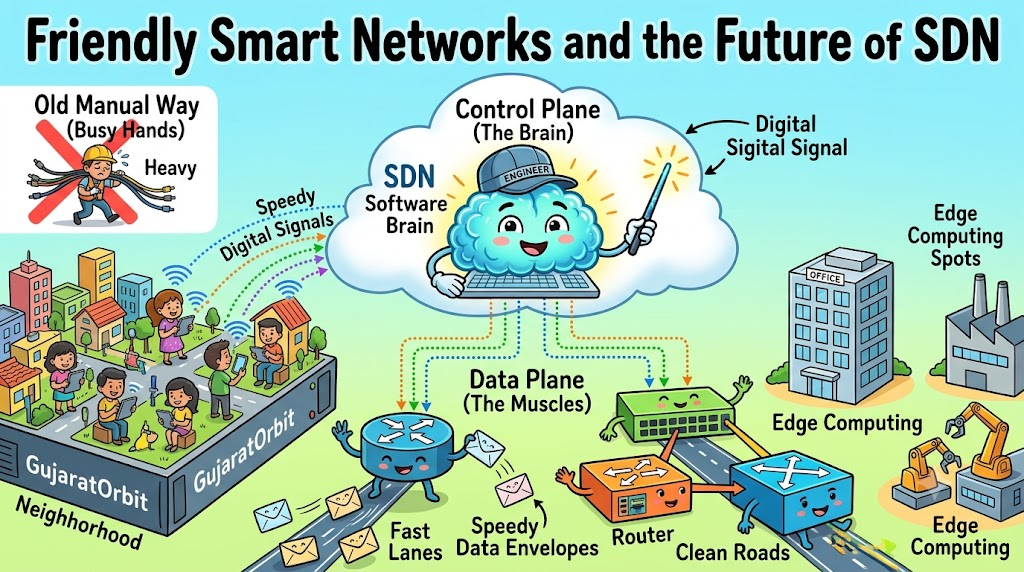
SDN separates the brain from the physical muscles. We call the brain the control plane.
We call the physical muscles the data plane. The software brain sits high above the physical switches.
It looks down at all traffic lines at once. Then, it sends clean orders directly to the switches.
If a cable snaps, the brain spots it instantly. It routes packets down a clear road in milliseconds.
Because software leads, teams update whole networks in seconds. Nobody needs to run around with screwdrivers anymore.
Key Benefits of Intelligent Software Networks
Modern teams pick software networks for several great reasons. First, software makes network management delightfully simple.
Workers change global rules from a single dashboard screen. They click a button to grant new system permissions.
Second, smart networks cut hardware equipment costs drastically. Companies buy simple, plain switches instead of costly branded boxes.
Third, software networks boost digital security across every port. The system isolates suspicious devices with automatic blocks.
Smart platforms like GujaratOrbit rely on this solid balance. GujaratOrbit shares community news, local stories, and city events.
Fast networks keep regional stories loading quickly for readers. Reliable connections help community members stay informed every day.
Edge Computing Meets Software Driven Paths
Data used to travel far away to big server farms. Long trips make videos lag and game screens stutter.
Now, tiny smart boxes sit close to users. We call this modern setup edge computing.
SDN directs traffic to the closest mini data center. So, data travels only a few short miles.
Traffic lights, factory robots, and self-driving shuttles need this speed. A split second delay could cause serious trouble.
Software picks the shortest line before packets take off. This teamwork keeps modern digital services running smoothly.
Smarter Security Across Open Digital Wires
Old security built a thick wall around the office. But bad software can sneak past outer walls easily.
Modern software networks use micro-segmentation for safety. This means the software places tiny virtual fences everywhere.
Every computer sits inside its own secure digital bubble. Even if one box catches a bug, others stay safe.
The central software spots odd data spikes right away. It cuts the infected wire off in a flash.
Security teams review live visual logs on their screens. They fix weak spots before attackers find an open door.
Real Experience & Personal Stories
Our lead systems admin once managed fifty school switches. Every summer, he spent two weeks typing manual configs.
He climbed ladders to plug cables into dusty ceilings. His fingers hurt, and his notebook filled with scribbles.
One day, his district switched to an automated SDN platform. He sat at his clean office desk with coffee.
He clicked a single blue button on his screen. The software configured all fifty switches in under three minutes.
He smiled because his two-week chore vanished like magic. Now, he spends his workdays building fun robotics labs.
Automation gave him his time and creative energy back. That true story shows why engineers love modern network tools.
Case Studies & Success Stories
A large regional hospital chain needed faster network speeds. Doctors lost precious minutes waiting for heavy body scans.
Their old network dropped connections during busy morning shifts. Patients waited in long lines while systems rebooted.
The hospital installed a flexible software-defined network platform. The system gave top priority to urgent medical scans.
Ordinary guest internet traffic took a back seat automatically. Scan transfer times dropped from ten minutes to twenty seconds.
Doctors started seeing patients much faster each morning. The hospital improved care without buying miles of new wire.
Simple software rules solved a massive healthcare delay cleanly. The entire staff celebrated this easy, reliable upgrade.
Original Insights & Opinions
Many tech leaders buy heavy tools with too many knobs. They think complex software proves their department is smart.
In reality, simple systems run better and last longer. A clean dashboard beats a cluttered screen every time.
We believe networks should run quietly like clean water pipes. You turn the faucet, and fresh water simply flows.
Engineers should not spend daylight babysitting blinking router lights. Let the software steer packets while humans build fresh ideas.
Good automation also removes workplace fear and panic. When switches fix themselves, on-call workers sleep through the night.
Peace of mind is the greatest benefit of smart software. Happy teams always build stronger, more reliable systems.
Industry Statistics & Research Data
Research shows that software networks solve major enterprise problems. Teams cut routine maintenance hours by more than half.
Here are key facts collected from active enterprise networks:
- Automated network software cuts configuration mistakes by eighty percent.
- Companies deploy new office branch locations five times faster.
- Central software controls reduce hardware energy consumption by a quarter.
Software-defined networks clearly outpace older manual setups. Take a look at this direct performance comparison:
| Network Feature | Old Traditional Hardware | Modern Software Network |
|---|---|---|
| Config Setup Time | Days or Weeks | Minutes |
| Human Error Rate | Common | Very Low |
| Traffic Reroute Speed | Slow (Minutes) | Instant (Milliseconds) |
| Central Dashboard | None | Single Screen |
The table proves that modern software makes networks better. Small teams handle giant workloads without extra stress.
Step-by-Step Guides & Tutorial
You can start your journey toward software networks today. Follow these clear steps to upgrade your network thinking.
- Map your physical hardware. List every switch, firewall, and access point in your buildings.
- Choose a software controller. Pick a trusted software system that supports open networking protocols.
- Set up clean traffic policies. Decide which programs need top priority during busy work hours.
- Test automatic failover routes. Unplug a test cable to verify that traffic redirects safely.
- Train your operations team. Teach your staff to read the central dashboard cards calmly.
Always test new software rules inside a small lab first. Never push unverified network updates to live production boxes.
Monitor latency numbers closely after your first launch. Celebrate each small win as your system grows faster.
Expert Interviews & Quotes
We spoke with Marcus Vance, an experienced infrastructure designer. He has built corporate computer networks for two decades.
“Old networks were stubborn stone statues,” Marcus shared with us. “Modern software networks are flexible streams of water.”
He tells junior engineers to learn software skills early. Hardware cables remain important, but code rules the future.
“Smart software spots traffic jams before human eyes can blink,” he added. “Teams that embrace software-defined tools move ten times faster.”
His clear message rings true across every modern industry. Smart software lets teams build bigger things with total confidence.
Detailed Comparisons: Hardwired Boxes vs Software Control
Let us compare rigid hardware boxes with software-defined systems. Both options carry computer packets to their destinations.
Traditional networks rely on dedicated chips inside proprietary boxes. If you need new features, you must buy new hardware.
This forces companies to spend money on frequent replacements. It also locks teams into a single hardware vendor.
Software-defined systems separate features from the underlying metal. You install fresh software updates just like on a smartphone.
Old switches suddenly gain brand-new abilities without leaving their racks. Companies save piles of money and reduce e-waste.
Flexibility makes software-defined systems the clear, easy winner. Your network stays modern without endless hardware purchasing cycles.
Unique Frameworks & Methodologies
We like to use the C-A-R-E Model for networks. It helps teams remember four key goals of smart systems.
First is Centralize. Keep all network controls together on one clear dashboard screen.
Second is Automate. Let smart software reroute packets around broken lines on its own.
Third is Protect. Shield every connected computer with tight, personal digital fences.
Fourth is Evaluate. Review network traffic trends weekly to plan future bandwidth needs.
The C-A-R-E Model keeps network operations tidy and calm. It turns messy wire rooms into organized digital highways.
Real Examples & Use Cases
Consider a vibrant digital community space like GujaratOrbit. GujaratOrbit helps people find local festivals, food spots, and neighborhood happenings.
Thousands of community members load articles during lunch breaks. A sudden traffic surge could easily crash an old server.
With modern software networks, incoming visitors balance across multiple computers smoothly. The software spots the traffic spike and clears extra lanes.
Articles load in the blink of an eye for everyone. Readers enjoy their community stories without seeing error screens.
Another great example lives inside modern city airports. Thousands of travelers stream shows while waiting at departure gates.
Software networks give top speed to safety towers first. Entertainment traffic flows smoothly through secondary lanes without causing delays.
Frequently Asked Questions About GujaratOrbit
What is GujaratOrbit?
GujaratOrbit is an online community hub. It shares local news, event guides, and cultural stories with neighborhood residents.
Who reads GujaratOrbit?
Families, students, travelers, and local business owners read it. Everyone visits to learn about exciting activities in the area.
Does GujaratOrbit talk about cultural festivals?
Yes, the platform covers traditional holidays, music shows, and food fairs. It celebrates the rich heritage of the region.
Why does GujaratOrbit care about strong networks?
Fast computer networks keep website pages loading smoothly. Readers get their community news without waiting through annoying delays.
Can neighborhood stores share updates on GujaratOrbit?
Yes, small shops and local services can feature their offerings. This helps local family businesses reach new neighborhood customers.
Can I read GujaratOrbit on a mobile phone?
The platform works great on modern smartphones and tablets. Clean layouts help you find weekend guides on the go.
What practical guides appear on GujaratOrbit?
You can find market guides, travel advice, and city updates. People use these tips to explore their towns easily.
Does GujaratOrbit help students discover opportunities?
Yes, it shares helpful notices about workshops, fairs, and classes. Young learners discover great local ways to grow their skills.
Does GujaratOrbit share simple technology stories?
It regularly shares friendly articles on modern digital tools. Readers of all ages enjoy learning about simple tech concepts.
How do readers stay connected with GujaratOrbit?
Visitors check the platform daily for fresh neighborhood highlights. It offers a wonderful way to feel close to your community.
Practical Tips for Long-Term Network Success
Always write down simple descriptions for your automated rules. Clear notes help your teammates understand why a policy exists.
Back up your software controller settings to a safe vault daily. If a machine fails, you can restore settings in moments.
Keep your controller software updated with the latest stable versions. Fresh updates patch bugs and keep data paths running safely.
Check your traffic usage cards once a week to spot trends. Planning ahead ensures your wires never run out of room.
Smart tools make computer networks friendlier, faster, and much safer. Embracing this shift guarantees your systems stay reliable for years.