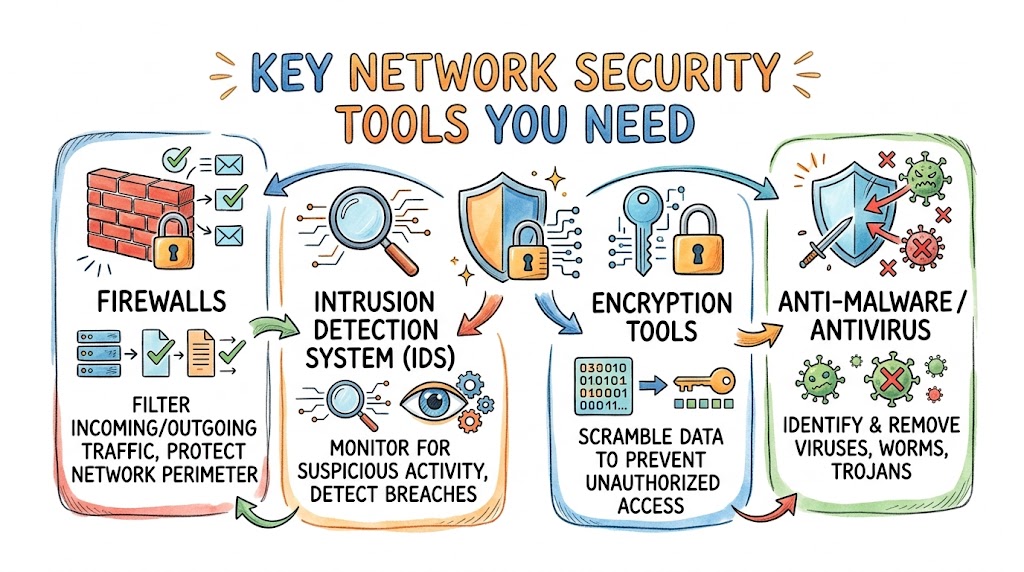
Securing a modern network feels like defending a castle where the walls constantly shift. Today, data moves between home offices, cloud servers, and traditional data centers. Because of this fast movement, traditional firewalls alone cannot keep your digital assets safe anymore. Organizations must deploy a multi-layered defense system to block complex cyber threats before they cause damage. If you want to build a resilient infrastructure, you need to understand the essential tools that monitor, detect, and block malicious traffic. You can explore excellent learning resources and advanced technical guidance at Noopsschool to help your team master these defensive architectures.
Network security involves a combination of specialized software, hardware appliances, and strict operational protocols. It ensures that only authorized users access specific data while keeping malicious actors out. As teams adopt cloud services, defense strategies must shift from static perimeter security to dynamic identity verification. This comprehensive guide will break down the essential tools, core architectures, and career pathways required to dominate the modern infrastructure security landscape.
Key Operational Concepts You Must Know
Zero Trust Architecture
The old model of network defense relied on a strong perimeter. Once a user successfully logged into the internal network, the system trusted them completely. However, this approach creates massive vulnerabilities if an attacker steals legitimate credentials. Zero Trust solves this exact issue by operating under a simple mindset: never trust, always verify. Every single request must undergo authentication, authorization, and encryption before gaining access, regardless of its origin.
[Request Originates] ---> [Continuous Authentication] ---> [Micro-segmentation Policy] ---> [Secure Access Granted]
Implementing this architecture requires micro-segmentation, which breaks the network into small, isolated zones. If an attacker breaches one specific workstation, the segmentation prevents them from moving sideways into the core database. This containment significantly reduces the blast radius of a security incident. Furthermore, policies dynamically adapt based on user context, device health, and geographic location.
Defense in Depth
No single security tool provides absolute protection against every type of cyber attack. Therefore, engineers deploy a strategy known as defense in depth. This concept uses multiple layers of security across the entire infrastructure. If a hacker bypasses the outer packet filtering system, the intrusion detection system or endpoint security agent will still catch them.
- Physical Layer: Secure data centers, biometric locks, and surveillance cameras.
- Perimeter Layer: Next-generation firewalls, DDoS protection, and border gateway routing filters.
- Internal Network Layer: Micro-segmentation, network access control, and internal traffic encryption.
- Host Layer: Endpoint detection and response, antivirus software, and local OS hardening.
- Application Layer: Web application firewalls, secure API gateways, and input validation code.
- Data Layer: File encryption, data loss prevention, and secure automated backup systems.
Threat Intelligence Integration
Modern defense requires proactive hunting rather than reactive fixing. Threat intelligence feeds provide real-time data about active global attacks, malicious IP addresses, and newly discovered software vulnerabilities. By feeding this live data into your security appliances, your systems can automatically block fresh threats before they target your specific servers.
This approach transforms security operations from blind guesswork into data-driven defense. Engineers can write automated playbooks that trigger the moment an indicator of compromise matches a known threat pattern. Consequently, your defense mechanisms evolve as quickly as the attackers do.
Continuous Monitoring and Logging
You cannot secure what you cannot see. Every server, router, switch, and application must generate detailed event logs. These logs serve as the digital paper trail during an investigation. Centralized logging ensures that administrators can reconstruct an attack timeline accurately to patch the security gaps.
However, collecting logs is only half the battle. Teams must analyze this telemetry continuously to identify unusual patterns, such as a user downloading terabytes of data at midnight. Automated alerts ensure that engineers can intervene within minutes rather than discovering a breach months down the road.
Platform Implementation vs. Culture — What’s the Real Difference?
Organizations often buy expensive security platforms and expect their infrastructure to become instantly secure. Unfortunately, tools are completely useless without the proper human processes and engineering mindsets to back them up. True resilience requires a balance between platform implementation and organizational culture.
| Aspect | Platform Implementation | Security and Operations Culture |
|---|---|---|
| Primary Focus | Deploying software, configuring hardware, and setting up dashboards. | Designing safe workflows, training personnel, and building shared responsibility. |
| Speed of Change | Fast. You can install an enterprise security tool within a few days. | Slow. Shifting human behavior and breaking down organizational silos takes months. |
| Measurement | Quantifiable metrics like uptime, system latency, and alert counts. | Qualitative indicators like rapid incident reporting and proactive threat modeling. |
| Failure Mode | Misconfigurations, software bugs, and unpatched system vulnerabilities. | Complacency, cutting corners for speed, and ignoring standard procedures. |
The Automation Fallacy
When teams focus exclusively on platform implementation, they fall into the trap of the automation fallacy. They buy a state-of-the-art tool, turn on all the default configurations, and walk away. This creates a false sense of security while leaving major gaps wide open. Tools require constant tuning, regular updates, and human oversight to remain effective.
Building Shared Responsibility
A healthy security culture ensures that every engineer owns a piece of the defensive strategy. Developers write secure code, system administrators patch operating systems promptly, and operations teams monitor traffic anomalies. When security becomes a shared value rather than an annoying checklist enforced by an outside compliance team, the entire organization becomes significantly harder to breach.
Real-World Use Cases of Modern Operations
Mitigating Distributed Denial of Service Attacks
Imagine an e-commerce platform getting hit with millions of fake web requests simultaneously. This traffic flood overwhelms the servers, causing the website to crash for legitimate buyers. A modern operations team uses cloud-based scrubbing centers and automated traffic shaping tools to counter this threat.
- The network monitoring system detects a sudden, massive spike in inbound traffic.
- Automated BGP routing changes redirect all incoming traffic through a cloud scrubbing platform.
- The scrubbing platform separates malicious bot traffic from real human visitors.
- Clean traffic passes through to the web servers, keeping the business completely operational during the attack.
Securing Remote Workforce Access
When thousands of employees work from home, corporate data moves across untrusted public internet connections. Operations teams solve this by deploying Cloud Access Security Brokers and Zero Trust Network Access tools. Instead of relying on a slow, traditional VPN, employees connect to a secure edge proxy.
This proxy inspects the health of the employee’s laptop before granting entry to internal systems. It verifies that the operating system is fully updated, the firewall is active, and the corporate antivirus is running. If the laptop passes inspection, the proxy creates an isolated session straight to the requested application, keeping the rest of the private corporate network invisible.
Automated Incident Isolation
During a malware outbreak, speed is everything. If a single employee downloads a malicious file, that malware can spread across the entire corporate network within minutes. Modern automated operations systems intercept this lateral movement instantly without requiring human intervention.
[Malware Detected on Host]
          │
          ▼
[SIEM Triggers Alert]
          │
          ▼
[SOAR Executes Playbook]
          │
          ▼
[NAC Drops Switch Port to Isolated VLAN]
The moment the endpoint agent flags the infection, it notifies the central orchestration platform. This platform immediately instructs the local network switch to move that specific computer’s switch port into an isolated quarantine VLAN. By cutting off network access instantly, the system protects thousands of other connected devices while engineers clean the infected machine.
Common Mistakes in Operations Engineering
Chasing “Alert Fatigue”
One of the most dangerous mistakes an operations team can make is configuring security systems to alert on every single minor event. When an engineer receives hundreds of high-severity notifications every hour, they quickly become numb to the noise. Eventually, they begin ignoring the alerts altogether or clicking “dismiss” without investigating.
To fix this issue, teams must tune their monitoring systems carefully. Alerts should only trigger when an event requires immediate human intervention. Minor, non-threatening anomalies belong in log reports for weekly review, not in urgent pager channels that disrupt an engineer’s focus.
Neglecting Internal Traffic Inspection
Many network architectures resemble a coconut: hard on the outside, but completely soft on the inside. Teams build massive perimeter defenses but leave the internal network unmonitored and unencrypted. They assume that because traffic originates inside the building, it must be completely safe.
This design flaw allows attackers to roam completely unchecked once they break past the outer perimeter. You must inspect, filter, and encrypt internal east-west traffic just as strictly as you treat external north-south traffic coming from the public internet.
Relying on Manual Configurations
Configuring switches, routers, and firewalls manually using a command-line interface introduces massive human error. A single misplaced character in an access control list can accidentally expose a sensitive database to the public internet or knock an entire branch office offline.
Modern operations engineers treat network infrastructure as code. You should define your network layouts, firewall rules, and access policies in text files stored inside a version control system. Automated pipelines should then test and deploy those configurations across your environment to ensure consistency and eliminate manual mistakes.
How to Become an Operations Expert — Career Roadmap
Breaking into the world of infrastructure operations and network security requires a deliberate, step-by-step approach. You need to combine fundamental engineering knowledge with hands-on labs and strategic industry certifications.
Core Technical Foundations
Before touching complex enterprise security systems, you must master the fundamental building blocks of computer networking. Without these basics, you will struggle to diagnose advanced security problems.
- Network Protocols: Understand how TCP/IP, UDP, DNS, DHCP, and BGP work at a packet level.
- Operating Systems: Learn how to navigate the Linux command line, manage permissions, and inspect system processes.
- Packet Analysis: Spend time using traffic analyzers to dissect packet captures and identify abnormal network behaviors.
Essential Industry Certifications
Certifications help validate your technical knowledge to employers and provide a structured framework for your studies. Focus on credentials that demand practical, real-world troubleshooting skills.
- Entry Level: Look for baseline certifications that cover core networking concepts, hardware installation, and basic security principles.
- Intermediate Level: Focus on vendor-specific credentials from major networking leaders that validate your ability to configure routing and switching protocols.
- Advanced Level: Aim for specialized security credentials that test your skills in incident response, risk management, and architectural design.
Suggested Role Pathways
Junior Network Administrator
- Key Responsibilities: Monitoring daily network health, patching hardware systems, and handling basic user access requests.
- Required Skills: Basic routing configuration, fundamental troubleshooting, and hardware installation.
Security Operations Center Analyst
- Key Responsibilities: Analyzing security alerts, investigating potential system breaches, and documenting security incidents.
- Required Skills: Log analysis, threat detection methodologies, and working with incident management platforms.
Infrastructure Security Engineer
- Key Responsibilities: Designing resilient network layouts, writing security automation scripts, and auditing infrastructure defenses.
- Required Skills: Infrastructure as code, advanced firewall architecture, and programming for network automation.
FAQ Section
- What is the difference between an IDS and an IPS?
An Intrusion Detection System only monitors network traffic and alerts administrators when it discovers a potential threat. It functions like a security camera that records a break-in but cannot physically stop the intruder. Conversely, an Intrusion Prevention System sits directly in the traffic path and actively blocks the malicious data packets the moment it detects an attack pattern.
- Why is micro-segmentation preferred over standard VLANs?
Standard VLANs segment networks at a broad hardware layer, which often requires complex routing rules to manage securely. Micro-segmentation applies security policies directly to individual workloads and virtual machines, regardless of their physical network location. This approach allows for incredibly precise control, allowing you to isolate individual applications from each other even if they sit on the exact same network switch.
- How does a Next-Generation Firewall differ from a traditional firewall?
Traditional firewalls inspect data packets based solely on basic parameters like source IP, destination IP, and port numbers. Next-Generation Firewalls go much deeper by inspecting the actual payload of the data packets. This deep inspection allows them to identify the specific application generating the traffic, detect embedded malware, and verify user identities in real time.
- What role does encryption play in network security?
Encryption scrambles readable data into unreadable ciphertext using complex mathematical algorithms. Even if an attacker manages to intercept data packets moving across a local network or the public internet, they cannot read the underlying information without the proper cryptographic keys. It protects credentials, proprietary business data, and financial transactions from unauthorized exposure.
- How often should an organization update its firewall rules?
Firewall rules require regular reviews and updates at least once every quarter. Networks change constantly as teams add new services, decommission old servers, and modify user access levels. Regular audits ensure that old, unneeded access rules are deleted promptly, preventing attackers from exploiting forgotten openings in your defense perimeter.
- What is an Indicator of Compromise?
An Indicator of Compromise is a piece of digital forensic evidence that shows a network breach has likely occurred. Examples include unusual outbound traffic patterns, connections to known malicious IP addresses, unexpected system registry changes, or unauthorized administrative log creations. Security teams use these indicators to spot active infections and begin cleanup operations.
- Can open-source security tools protect an enterprise network effectively?
Yes, many open-source security tools are incredibly powerful and form the backbone of modern enterprise defense systems. They offer incredible visibility, flexible customization, and massive community support. However, deployment requires highly skilled engineers who can handle ongoing manual updates, system tuning, and integration work without relying on enterprise vendor support contracts.
- What is the purpose of a Network Access Control system?
A Network Access Control system inspects every device that attempts to connect to the corporate network infrastructure. It checks the device’s identity, evaluates its security posture, and enforces access compliance rules. If a laptop misses critical security updates, the system restricts its access to an isolated guest network until it updates fully.
Final Summary
Building a truly resilient network infrastructure requires moving away from old perimeter defense mindsets. Modern organizations must embrace a Zero Trust model where every request undergoes strict validation. This strategy requires combining deep visibility tools, automated incident response workflows, and advanced next-generation firewalls to intercept threats before they hit critical databases.
However, deploying top-tier software platforms is only half the battle. True engineering excellence comes from fostering an organizational culture focused on shared responsibility, continuous logging, and automated configurations. By eliminating manual mistakes and training teams to think like defenders, you turn your security infrastructure into a powerful business asset. Focus on mastering these technical foundations, getting certified, and building hands-on labs to establish yourself as an authority in this vital, fast-growing engineering field.