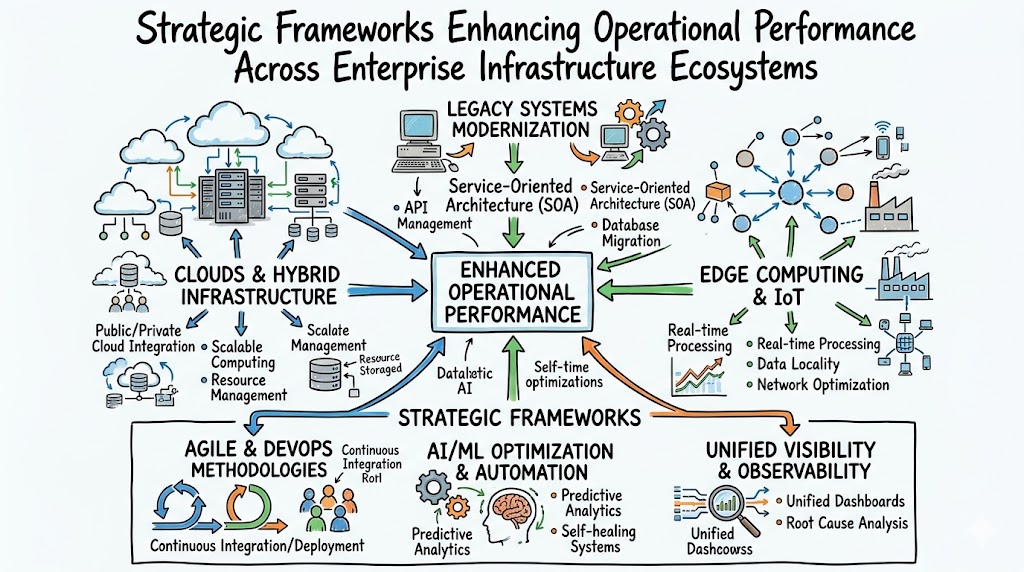
Imagine a sudden database deadlock halting millions of global payment transactions simultaneously. Consequently, customer carts freeze, checkout flows break, and the engineering department descends into absolute chaos. Traditional infrastructure teams usually struggle to isolate the root cause because they operate within isolated structural silos.
Modern digital environments require a complete departure from reactive firefighting strategies. The Role of Network Operations in Digital Transformation bridges this exact gap by introducing software engineering practices directly into infrastructure management. This methodology guarantees that massive distributed architectures scale efficiently while maintaining structural stability.
This exhaustive masterclass covers foundational systems history, core reliability pillars, metric engineering, and team cultural dynamics. Furthermore, you will explore real-world operational scenarios, tooling ecosystems, and actionable engineering roadmaps.
To build reliable systems, check out the expert-led courses at Noopsschool to master these essential engineering methodologies.
The Origin of Systems Infrastructure
The Early Industrial Bottlenecks
Traditional enterprise architectures relied heavily on distinct separation between development teams and operations engineers. Developers focused entirely on shipping features quickly, while operations staff prioritized system stability. Consequently, this structural divide created an adversarial relationship where code was thrown over a wall.
Manual setups dominated the deployment pipeline, causing frequent mistakes during production releases. Whenever a failure occurred, fingers were pointed, and remediation delayed recovery. Because visibility into live environments was heavily restricted, diagnosing underlying issues required hours of manual log parsing.
Moving Toward Unified Workflow Automation
As application complexity grew, organizations realized that manual infrastructure provisioning could not sustain corporate growth. The introduction of cloud infrastructure demanded a profound shift toward unified workflow automation. Teams began treating infrastructure configurations exactly like application code.
Version control systems became the single source of truth for entire enterprise environments. As a result, code integration and deployment processes turned into standardized, automated pipelines. This technological shift broke down structural barriers and allowed teams to share operational responsibilities.
Global Expansion Across Commercial Ecosystems
The rapid expansion of web-scale enterprises pushed traditional infrastructure frameworks to their absolute limits. Organizations faced unprecedented scaling challenges that required automated self-healing mechanisms. Consequently, these robust operational frameworks spread quickly across large-scale tech enterprises worldwide.
Modern business ecosystems now view resilient infrastructure as a core competitive advantage. Because global users demand constant availability, continuous cross-functional optimization has become mandatory. Today, the entire corporate landscape relies on automated operations to maintain competitive market positions.
Defining Strategic Operations Management
The Core Operational Structure
The foundational architecture of strategic operations management centers on continuous feedback loops. System metrics flow from distributed nodes directly into centralized aggregation engines. As a result, engineers gain immediate visibility into the performance of infrastructure layers.
[User Traffic] ──> [Edge Gateways] ──> [Application Microservices]
                                               │
                                       (Telemetry Streams)
                                               ▼
[Automated Remediation] ◄── [Analysis Engine] ◄── [Centralized Observability]
This structure converts telemetry data into actionable operational insights. Automated compliance policies validate every infrastructure modification before execution. Ultimately, this approach creates an organized, predictable deployment environment that minimizes human intervention.
Daily Tasks of Systems Coordinators
Systems coordinators spend their day building automated solutions rather than manually executing repetitive tasks. They write infrastructure-as-code scripts to provision dynamic computing environments. Additionally, these specialists configure telemetry dashboards to track system performance trends.
They also review recent systemic anomalies to uncover hidden performance bottlenecks. When an incident occurs, coordinators assist in stabilizing the environment using automated playbooks. Afterward, they focus on optimizing resource utilization to control corporate cloud expenditures.
Localized Control vs. Broad System Architecture
Managing localized components requires deep knowledge of specific software services or individual server nodes. Engineers focus heavily on tuning specific application configurations and local storage parameters. However, broad system architecture requires a holistic view of the entire global infrastructure network.
Architects must understand how different microservices communicate across distributed geographic regions. They analyze data replication delays and traffic routing patterns under heavy user loads. Balancing localized adjustments with macro-level design ensures that the entire system remains healthy.
The Efficiency Mindset
Transitioning to modern operations requires a major cultural shift in how teams view system failures. Engineers must accept that components will fail eventually in complex, distributed environments. Therefore, the focus changes from striving for absolute perfection to designing resilient, fault-tolerant networks.
Teams prioritize long-term system stability over short-term manual fixes. Every repetitive issue triggers an engineering project dedicated to eradicating the underlying root cause permanently. This efficiency mindset ensures that infrastructure scales cleanly without demanding proportional headcount increases.
The 7 Core Principles of The Role of Network Operations in Digital Transformation
1. Embracing Risk and Managing Variability
Achieving absolute 100% uptime remains completely impossible and financially impractical for digital enterprises. Therefore, modern operations teams define and manage an acceptable level of systemic risk. This strategy balances fast-paced feature releases with the baseline safety of production environments.
By acknowledging potential vulnerabilities, organizations can innovate rapidly without fearing minor service disruptions. This principle ensures that teams spend engineering efforts where they provide the most value.
2. Establishing Service Level Objectives (SLOs)
Systems must have clearly defined, measurable targets to evaluate operational success accurately. Teams establish performance goals that directly align with actual user experience. These metrics prevent arguments between product teams and operations engineers regarding system health.
With solid targets in place, data determines whether a team can deploy new features or must focus on stability. This objective approach ensures business priorities remain balanced.
3. Eliminating Toil and Manual Processes
Toil consists of repetitive, operational tasks that lack long-term value and can be automated. Modern engineering principles demand that teams limit manual administrative work to less than half of their time. The remaining time goes toward valuable engineering projects that improve system architecture.
Systematically removing manual tasks prevents human errors and reduces engineering burnout. Automation ensures that system scaling depends on software efficiency rather than manual labor.
4. Monitoring & Observability Across the Pipeline
Complete visibility across the entire deployment environment prevents dangerous blind spots. Engineers collect metrics, logs, and traces from every active infrastructure layer. This comprehensive data collection allows teams to observe internal system states clearly.
                  ┌──────────────────────────────┐
                  │ Total Telemetry Architecture │
                  └──────────────┬───────────────┘
         ┌───────────────────────┼───────────────────────┐
         ▼                       ▼                       ▼
┌─────────────────┐     ┌─────────────────┐     ┌─────────────────┐
│     Metrics     │     │      Logs       │     │     Traces      │
│ (System Health) │     │ (Event Context) │     │ (Request Paths) │
└─────────────────┘     └─────────────────┘     └─────────────────┘
When performance degrades, observability tools help engineers pinpoint the exact component causing the bottleneck. Consequently, diagnostic times drop from hours to seconds.
5. Automation Over Manual Coordination
Scaling modern workflows requires smart software solutions instead of human coordination. Teams use automation to handle infrastructure scaling, software deployments, and system security verifications. This engineering approach eliminates human error from routine operational workflows.
Automated systems react to load spikes faster than any human operator ever could. This reliance on software solutions keeps platforms stable during unexpected traffic surges.
6. Release Engineering and Deployment Stability
Safe application delivery requires consistent, predictable, and fully automated release strategies. Engineers use progressive deployment techniques like canary releases or blue-green strategies to minimize blast radiuses. These methods ensure that new updates affect only a small percentage of users initially.
Automated rollback mechanisms monitor health indicators during every single deployment phase. If metrics decline, the system reverts to the previous stable state immediately.
7. Simplicity in Network Architecture
Keeping infrastructure environments clean and minimal directly reduces potential failure surfaces. Complex designs hide hidden dependencies that can trigger unpredictable cascading failures. Therefore, engineers design simple, modular architectures that are easy to understand and maintain.
Simple systems make onboarding new engineers fast and hassle-free. Most importantly, clean architecture allows teams to troubleshoot and fix production issues quickly.
Key Operational Concepts You Must Know
SLA vs. SLO vs. SLI — Explained Simply
Understanding the distinct differences between service agreements, objectives, and indicators is vital for managing infrastructure performance.
- Service Level Indicator (SLI): A specific, quantifiable metric that measures the performance of a service in real-time, such as request latency or error rate.
- Service Level Objective (SLO): A target metric value defined over a specific window of time that the service must achieve to satisfy users.
- Service Level Agreement (SLA): A formal business contract specifying financial or legal penalties if the system fails to meet defined SLO targets.
Error Budgets — The Game Changer for Operational Risk
An error budget represents the total allowable downtime or performance degradation a service can experience over a specific period. For instance, a 99.9% SLO gives a system a 0.1% error budget for unexpected issues or scheduled updates. This concept changes how product teams and operations engineers collaborate.
As long as the error budget remains positive, product developers can launch risky new features. However, if the error budget is exhausted, feature deployments halt immediately. The entire engineering team then focuses exclusively on stabilizing the infrastructure.
Toil — The Silent Productivity Killer in Infrastructure
Toil includes administrative tasks that are repetitive, manual, tactical, and lack long-term strategic value. Examples include manually resetting user passwords, running routine database cleanup scripts, or manually provisioning server instances. Left unchecked, toil drains engineering energy and blocks innovation.
Teams calculate toil by tracking time spent on non-engineering activities each week. To eliminate this overhead, engineers build automated scripts, self-service portals, and self-healing systems. Eradicating toil allows engineers to focus on high-impact architectural design.
Incident Management & Postmortems
When production failures happen, structured incident management guidelines ensure rapid, coordinated resolution. Teams assign specific roles, such as incident commanders and communications leads, to avoid confusion. Once the system stabilizes, the engineering group conducts a thorough, blameless postmortem.
Blameless postmortems assume that engineers acted with good intentions based on the information they had. Instead of assigning blame, the review focuses on identifying the systemic flaws that allowed the failure to occur. This open approach encourages teams to document issues honestly and implement permanent fixes.
Capacity Planning
Capacity planning involves forecasting resource requirements to handle future organizational growth and traffic spikes. Engineers analyze historical utilization data to predict when storage, compute power, or bandwidth limits will be reached. This proactive analysis prevents sudden resource exhaustion during critical business events.
Modern teams leverage automated predictive scaling algorithms to adjust resources dynamically. This ensures optimal application performance while minimizing unnecessary cloud infrastructure expenditures.
The Four Golden Signals of Pipeline Performance
Evaluating user-facing performance requires teams to monitor the four golden signals of distributed systems.
| Golden Signal | Technical Focus | Measurement Description |
| Latency | Response Time | The exact time taken to process and fulfill a specific service request. |
| Traffic | System Demand | The overall volume of demand placed on the system, such as HTTP requests per second. |
| Errors | Failure Rate | The rate of requests that fail explicitly, implicitly, or return incorrect data payloads. |
| Saturation | Resource Limits | The fraction of system resources that are fully utilized, highlighting architecture bottlenecks. |
Platform Implementation vs. Culture — What’s the Real Difference?
The Philosophy Difference
Understanding the distinction between overall cultural philosophies and concrete engineering implementations is essential. DevOps represents a cultural movement that encourages shared responsibility and communication across siloed teams. It focuses on breaking down organizational walls to improve software delivery velocity.
In contrast, the engineering implementation provides concrete practices, specific roles, and tools to achieve that collaboration. One can think of it as implementing specific software engineering patterns directly to infrastructure management. Both philosophies share similar goals but use different approaches.
Roles & Responsibilities Compared
Reviewing the daily duties highlights how these distinct engineering roles operate within modern technology organizations.
- Cultural DevOps Engineers:
- Focus heavily on optimizing end-to-end software delivery value streams.
- Build shared continuous integration and continuous delivery deployment pipelines.
- Facilitate regular communication alignment between development and operations teams.
- Promote cultural shift toward continuous experimentation and learning.
- Infrastructure Reliability Specialists:
- Write software to automate operational tasks and infrastructure management.
- Manage and protect system error budgets, SLOs, and SLIs.
- Design high-availability distributed systems capable of scaling automatically.
- Lead blameless postmortems and build advanced automated self-healing workflows.
Can You Have Both Disciplines?
Modern enterprises often find that utilizing both engineering philosophies simultaneously yields excellent operational results. The cultural framework aligns business objectives and improves communication across various development teams. Meanwhile, specialized reliability teams focus on managing complex production environments at massive scale.
These teams support one another by sharing metrics and optimizing deployment automation frameworks. The cultural discipline accelerates feature creation, while the reliability discipline protects production stability. Together, they create a balanced ecosystem that drives business innovation safely.
Which One Should Your Team Adopt?
Choosing an operational framework depends on the size of your organization and current engineering maturity.
| Enterprise Scale | Recommended Approach | Operational Focus Areas |
| Early-Stage Startup | Shared Cultural DevOps | Focus on rapid delivery, pipeline automation, and cross-functional flexibility. |
| Mid-Sized Organization | Integrated Delivery Teams | Standardize automation tools, track initial SLOs, and reduce manual toil. |
| Large-Scale Enterprise | Dedicated Reliability Teams | Manage complex microservices, safeguard error budgets, and scale infrastructure. |
Real-World Use Cases of Modern Operations
How Tech Leaders Use Operational Metrics
Global streaming companies and retail platforms monitor hundreds of thousands of concurrent data streams in real-time. They track exact business metrics, like checkout success rates, alongside infrastructure performance indicators. If a localized microservice slows down, automated traffic routers instantly bypass the bottleneck.
These companies rely on clear SLO metrics to guide their deployment tempos automatically. When error budgets deplete, automated blocks halt code promotions to safeguard user experience. This data-driven strategy allows tech leaders to release updates safely without risking service disruptions.
Chaos Engineering Approaches to Resilient Systems
Resilient enterprises do not wait for random production failures to test their system defenses. Instead, they practice chaos engineering by deliberately injecting failures into live environments during working hours. Engineers disable entire cloud zones or inject artificial latency to see how systems respond.
[Inject Failure: Kill Zone B] ──> [Detect Anomaly] ──> [Automated Failover to Zone A]
                                                               │
                                                       (System Verified)
                                                               ▼
                                                    [Normal User Experience]
These controlled experiments uncover hidden architectural flaws before they cause major client-facing outages. Consequently, teams build self-healing software systems that handle unexpected infrastructure drops automatically.
Handling Reliability at Massive Scale
Distributed global architectures routinely manage millions of database transactions every single second. To handle this load, engineers utilize horizontal auto-scaling and intelligent traffic distribution networks. Services isolate themselves using bulkhead patterns to prevent single failures from bringing down the entire platform.
If an individual dependency goes offline, the system degrades gracefully by serving cached content. This architecture ensures that core customer journeys remain functional during localized outages.
High-Availability in Fintech Operations
Financial technology platforms operate with zero tolerance for data loss or transaction delays. Because a single minute of downtime can cost millions, fintech teams build ultra-redundant architectures. They run active-active deployments across multiple independent cloud providers to eliminate single points of failure.
Every single API interaction goes through distributed consensus verifications before data committing occurs. Reliability specialists continuously audit automated failover mechanisms to guarantee instant recovery during unexpected infrastructure collapses.
Scaled-Down but Essential Systems for Startups
Early-stage startups do not need complex global architectures, but they still benefit from core operational principles. Small teams use hosted monitoring solutions and automated managed infrastructure services to save time. By setting basic SLO targets early, they build a culture of reliability from day one.
Startups use simple container platforms to automate application rollbacks during deployment failures. This lightweight approach protects small businesses from critical early errors without adding massive administrative overhead.
Common Mistakes in Operations Engineering
Mistake 1 — Confusing System Management with Just Being On-Call
Many organizations mistakenly believe that operations engineering simply means having someone available to handle system alerts. This narrow view turns highly skilled engineers into reactive firefighters who spend all their time fixing problems manually. True operations engineering focuses on proactive software development to eliminate system vulnerabilities permanently.
Mistake 2 — Setting Unrealistic SLOs
Demanding perfect 100% uptime for a service creates a toxic work environment and stalls innovation. Achieving high reliability numbers requires massive engineering investments and slows down feature releases. Teams must set realistic targets that match what users actually need to be satisfied.
Mistake 3 — Ignoring Toil Until It’s Too Late
Ignoring repetitive manual tasks creates massive operational debt that stalls engineering progress. As an infrastructure expands, manual tasks grow exponentially until they consume the entire engineering team. Leaders must actively track and automate toil to protect engineering velocity and morale.
Mistake 4 — Skipping Blameless Postmortems
When organizations punish employees for system errors, engineers hide mistakes and avoid taking creative risks. Skipping blameless reviews leaves root causes unaddressed, ensuring that identical failures happen again. Organizations must focus on fixing flawed systems rather than blaming individuals.
Mistake 5 — Monitoring Without Actionable Alerts
Configuring alerts for every minor metric variation leads to alert fatigue and causes teams to ignore critical notifications. If an alert does not require immediate human intervention, it should be logged as a metric rather than triggering a notification. Every active alert must have a clear, actionable path to resolution.
Mistake 6 — Not Involving Operational Engineers in the Design Phase
Treating infrastructure reliability as an afterthought leads to fragile software designs that struggle to scale in production. Software developers often overlook production complexities like network latency or data consistency issues. Involving operations engineers early ensures architectures are built for long-term reliability.
Essential Infrastructure Tools & Technologies
Monitoring & Observability
Maintaining deep infrastructure insight requires a unified observability toolset to collect system data. Modern teams rely on specialized tools to track operational health across complex environments.
- Prometheus: An open-source, time-series data collection tool that gathers system performance metrics.
- Grafana: A visualization engine that converts complex data streams into clean dashboards.
- Datadog: A platform that combines metrics, application traces, and log data into a single view.
- New Relic: An observability suite providing deep visibility into application and infrastructure performance.
Incident Management
When critical production incidents happen, teams need reliable platforms to coordinate responses quickly.
- PagerDuty: An incident response platform that routes urgent system alerts to the right on-call engineers.
CI/CD & Release Engineering
Automating application code promotion requires reliable deployment tools to ensure stability.
- Spinnaker: A continuous delivery platform designed for multi-cloud deployments.
- Argo CD: A GitOps deployment tool that keeps live Kubernetes clusters matched with git repositories.
- Jenkins: An automation server used to build custom continuous integration pipelines.
Chaos Engineering
Injecting controlled failures helps teams find weaknesses before they turn into real-world outages.
- Chaos Monkey: An automation tool that randomly disables production instances to test infrastructure resilience.
SLO Management
Tracking service quality targets requires dedicated platforms to monitor real-world user experiences.
- Nobl9: A platform that integrates with existing data sources to calculate error budgets and SLO compliance.
How to Become an Operations Expert — Career Roadmap
Skills Every Specialist Must Have
Entering this competitive engineering domain requires a strong foundation in core technical competencies. Aspiring specialists must master the Linux command line and understand process isolation, file permissions, and system storage. Scripting proficiency in languages like Python or Go is essential for automating administrative tasks.
Engineers must also understand basic networking concepts, including TCP/IP routing, DNS resolution, and load balancing mechanics. Finally, learning infrastructure-as-code tools like Terraform allows engineers to manage cloud platforms safely using configuration files.
The Professional Learning Path
The journey into senior system architecture requires a structured, step-by-step approach to learning.
┌────────────────────────────┐
│ Step 1: Core Fundamentals  │ -> Master Linux administration, shell scripting,
└─────────────┬──────────────┘    and basic networking concepts.
              ▼
┌────────────────────────────┐
│ Step 2: Automation Mastery │ -> Learn Git workflows, container tools,
└─────────────┬──────────────┘    and infrastructure-as-code platforms.
              ▼
┌────────────────────────────┐
│ Step 3: Production Scale   │ -> Manage container orchestration and design
└────────────────────────────┘    robust distributed monitoring networks.
Certifications Worth Pursuing
Industry-recognized credentials validate your technical skills and help you stand out to recruiters. Earning certifications from major cloud providers like AWS, Google Cloud, or Microsoft Azure proves your ability to manage enterprise environments.
The Certified Kubernetes Administrator (CKA) credential demonstrates strong container orchestration skills. Additionally, specialized DevOps and security certifications confirm your commitment to building modern, reliable software systems.
Educational Resources with Noopsschool
Building production-grade system reliability requires structured guidance from experienced industry professionals. Aspiring engineers can Fast-track their career growth by utilizing the educational programs available at Noopsschool. The platform offers deep-dive, practical courses covering advanced automation, monitoring design, and container management.
Students learn by building real-world projects that simulate modern corporate infrastructure environments. This hands-on experience prepares engineers to manage complex production networks with confidence.
The Future of Systems Management
AI and Automation in System Optimization
Artificial intelligence is changing how enterprises monitor and maintain their digital systems. Machine learning models analyze telemetry data to spot hidden anomalies before they trigger an outage. Automated systems can even adjust server resources dynamically based on predicted traffic patterns.
AI helps teams find the root causes of complex incidents by scanning thousands of system logs in seconds. This smart automation allows engineers to shift from fixing past problems to preventing future ones.
Platform Engineering — The Evolution of Infrastructure
Platform engineering focuses on creating internal developer portals that simplify infrastructure management for product teams. These portals provide self-service tools for provisioning databases and code pipelines without needing manual assistance.
[Product Developers] ──> [Internal Developer Portal] ──> [Self-Service Resources]
                                                                  │
                                                       (Standard Templates)
                                                                  ▼
                                                       [Compliant Infrastructure]
This approach helps developers ship features faster while ensuring compliance with security standards. By packaging complex infrastructure patterns into simple tools, organizations accelerate delivery while maintaining high operational quality.
Management in Cloud-Native & Kubernetes Environments
Modern applications use containerized microservices that span across multiple cloud zones. Managing these dynamic environments requires advanced service meshes and declarative orchestration tools. Engineers must build observability networks capable of tracking transient containers that last only minutes.
Ensuring network security and data consistency across changing clusters requires continuous automation. As a result, operations teams focus on building resilient control planes that manage themselves.
Operational Skills That Will Matter Most
As infrastructure costs grow, engineering teams must prioritize financial cost optimization alongside technical performance. Professionals must design architectures that balance user performance with efficient resource consumption.
Deep observability across multi-cloud environments will remain an essential capability for modern enterprises. Ultimately, the most successful engineers will combine technical skills with a strong understanding of business priorities.
FAQ Section
- What is the typical career trajectory for a systems infrastructure specialist?Professionals usually begin their journey in foundational junior administration or application support roles to learn basic operations. As they master automation scripting and infrastructure-as-code tools, they move into dedicated reliability engineering positions. Senior engineers eventually progress into system architecture roles or leadership positions, guiding technology strategy for the entire enterprise.
- How do salary trends for infrastructure automation experts compare to standard development roles?Specialists who combine software engineering skills with deep infrastructure knowledge earn premium compensation in the technology market. Because managing large-scale production environments is highly complex, salaries often surpass those of standard application developers. Compensation scales rapidly as engineers gain experience with distributed architectures and large-scale cloud operations.
- What is the baseline difference between traditional system administration and modern reliability engineering?Traditional system administration focuses heavily on manually configuring, maintaining, and patching individual server instances. Modern reliability engineering treats operational tasks as software challenges, using code to automate infrastructure management at scale. This shift allows engineers to manage massive distributed networks efficiently without needing to grow headcount.
- How frequently should enterprise teams review and adjust their Service Level Objectives?Organizations should evaluate their operational targets quarterly to ensure metrics stay aligned with changing user expectations. Reviews should also occur after major architectural changes or when new feature rollouts modify system behavior. Regular updates keep targets realistic and prevent engineering teams from chasing unnecessary performance goals.
- Which programming languages are most valuable for modern operations engineers to learn?Python and Go remain the most valuable languages for automating modern infrastructure environments. Python is excellent for writing automation scripts, data analysis, and building rapid system prototypes. Go has become the standard language for cloud-native tools like Kubernetes, making it essential for deep system integration.
- Can small startups implement error budgets without slowing down their business growth?Startups can easily adapt lightweight error budget concepts to balance release velocity with system stability. Instead of using complex tracking platforms, early-stage teams use simple uptime metrics to guide their deployment choices. This early focus helps startups build a culture of reliability without adding heavy administrative overhead.
Final Summary
Modern digital transformation requires organizations to move away from legacy infrastructure silos and adopt automated operational frameworks. By embracing systemic risk, setting clear objectives, and systematically reducing manual toil, enterprises build resilient platforms that scale effortlessly. Using the right observability tools, automation engines, and blameless cultures ensures that production networks stay stable during traffic spikes. Ultimately, combining technical expertise with a proactive mindset allows modern tech leaders to deliver fast, safe, and reliable user experiences. Take your infrastructure expertise to the next level by exploring the professional training tracks at [Noopsschool].