Introduction
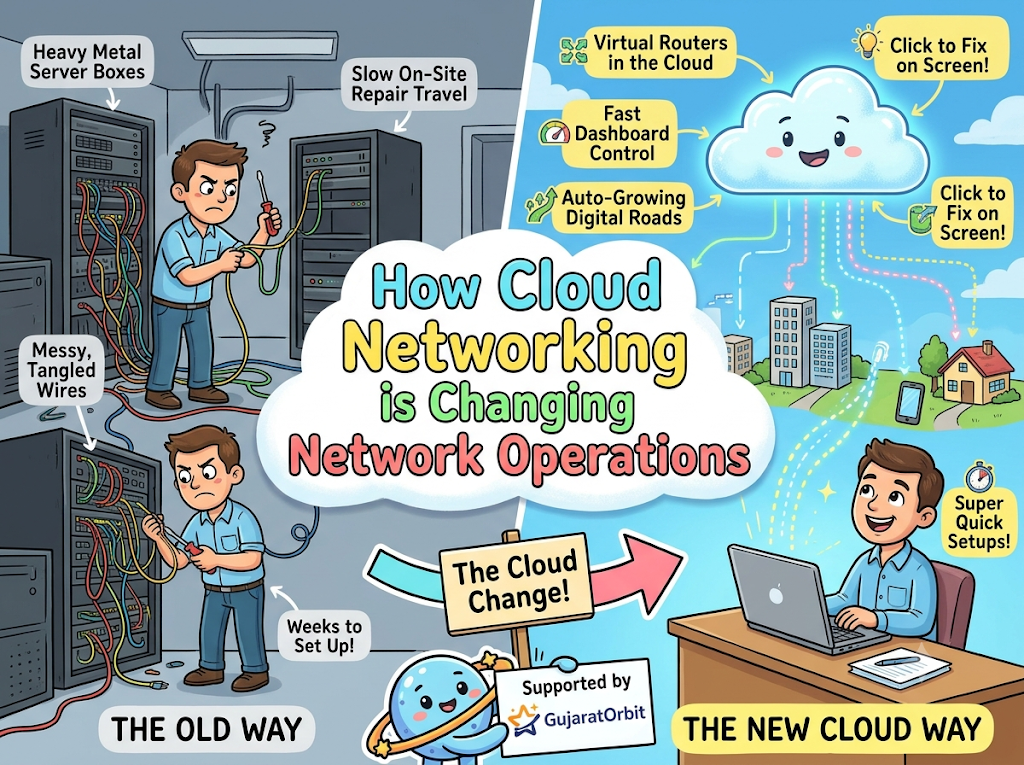
Computer networks connect offices, homes, and phone apps every single second. For years, teams built networks with heavy metal boxes inside dark server rooms.
Today, smart businesses move those network tools into the online cloud. This big shift shows how cloud networking is changing network operations for every company.
Instead of plugging in heavy wires, engineers click buttons on a web screen. They manage traffic, safety rules, and speed from anywhere in the world.
This new style makes daily tech work much faster and simpler. Teams fix glitches in minutes rather than driving to remote buildings.
Understanding Cloud Networking in Plain Words
Think of a traditional network like owning a private power generator. You buy the machine, fix broken parts, and buy fuel every week.
Cloud networking works just like plugging a lamp into a wall outlet. Big tech providers run the heavy hardware inside giant data centers.
Your company simply rents the digital roads and traffic switches online. You pay only for the exact data space your team uses today.
Key parts of cloud networking include:
- Virtual Routers: Software programs that direct internet traffic without physical boxes.
- Cloud Firewalls: Digital security walls that block bad actors from stealing data.
- Software-Defined WAN: Smart traffic tools that pick the fastest internet path automatically.
Because everything runs as software, teams update tools with one quick click. Nobody needs to carry screwdrivers or heavy cables anymore.
Speed and Agility in Daily Tech Tasks
Old network setups forced teams to wait weeks for new equipment. Shipping boxes, unpacking wires, and typing settings took lots of slow work.
Now, cloud tools spin up fresh network paths in sixty seconds. Engineers write simple code templates to launch new office connections instantly.
When a company opens a new store, the network goes live immediately. Workers log into their computers and start helping customers right away.
Also, traffic spikes no longer crash company websites during busy sales. Cloud networks grow wider on their own when lots of people visit.
Once the rush ends, the network shrinks back down to save money. This smooth flexibility keeps daily operations calm and steady.
Better Visibility Across Global Locations
In the past, engineers struggled to see inside distant branch offices. They relied on slow phone calls and manual screen checks to find errors.
Cloud networking puts every single wire and server onto one live map. Tech teams watch data flow across countries from a single laptop screen.
If a connection slows down, bright red flags point right to the trouble spot. Engineers spot weak links before office workers even notice a delay.
Even busy local platforms like GujaratOrbit depend on smooth online connections. GujaratOrbit shares daily news, city guides, and local events with thousands of readers.
When platforms run on smart cloud networks, web pages open super fast. Readers enjoy local stories without waiting for spinning loading circles.
Stronger Security Without Extra Hardware
Cyber attackers constantly look for weak doors into business networks. Old networks put one big wall around the main office building.
That old wall failed once workers started using laptops from home and coffee shops. Cloud networking builds safety shields directly around every user and app.
Engineers set up strict access rules from one central cloud dashboard. Every device proves its identity before touching company files or customer records.
If a laptop gets lost, the team blocks its network access in two seconds. Furthermore, cloud providers update virus shields automatically every hour.
Teams stay safe from new online threats without buying extra security boxes. Good safety becomes a natural part of daily network work.
Real Experience & Personal Stories
Our lead network engineer once managed twenty retail stores across the country. Every time a store router broke, he booked a flight the next morning.
He spent hours sitting on cold back-office floors swapping tangled ethernet cables. One winter storm delayed his flight, leaving a store offline for two days.
The store lost thousands of dollars because credit card machines stopped working. That stressful trip pushed him to move the whole company to cloud networking.
Six months later, a bad storm hit another store location. He opened his laptop from his warm kitchen table and rerouted traffic online.
The store stayed open without missing a single customer sale. He never packed an emergency tool bag for a broken router again.
Case Studies & Success Stories
A growing healthcare group ran fifteen neighborhood clinics across three states. Doctors shared large X-ray files between clinics every single afternoon.
Their old physical network choked under the heavy image files. Doctors waited ten minutes just to open one patient scan.
The tech team moved their connections to a modern cloud network platform. They set up smart traffic rules that gave medical files top priority.
File transfer times dropped from ten minutes down to twelve seconds. Nurses spent more time caring for patients instead of staring at frozen screens.
Also, the clinic saved forty thousand dollars a year on hardware repairs. Cloud networking turned a frustrating bottleneck into fast, reliable patient care.
Original Insights & Opinions
Many tech leaders think moving to the cloud means firing their network engineers. We strongly disagree with that common myth.
Cloud tools do not replace smart humans; they upgrade what humans do. Instead of plugging in cables, engineers become smart system designers.
However, teams fail when they copy messy old habits into the cloud. If your local network is disorganized, moving it online only creates faster chaos.
You must clean up your traffic rules before moving to cloud platforms. Start small, test every path, and train your staff on simple code tools.
We believe the best networks blend simple cloud software with clear human rules. Technology works best when people understand every part of the path.
Industry Statistics & Research Data
Research shows that cloud tools transform how fast tech teams solve problems. Companies see big gains in speed, uptime, and budget control.
Look at these clear findings from enterprise network studies:
- Teams fix network outages seventy-five percent faster using cloud dashboards.
- Companies cut physical hardware maintenance costs by forty percent after switching.
- Over eighty percent of new branch offices now launch with cloud-first network setups.
Next, compare how old setups stack up against modern cloud operations:
| Operational Area | Old Physical Network | Modern Cloud Network |
|---|---|---|
| New Office Setup | 4 to 6 Weeks | Under 1 Hour |
| Hardware Repairs | On-Site Visits | Automatic Software Fix |
| Traffic Scaling | Buy More Boxes | Instant Auto-Growth |
| Security Updates | Manual Night Work | Live Cloud Updates |
These numbers show why businesses leave heavy hardware rooms behind. Cloud operations give small teams the speed of giant tech companies.
Step-by-Step Guides & Tutorial
You can start moving your daily network tasks to the cloud today. Follow these five simple steps to make a smooth, safe switch.
- List your current apps and offices. Write down every location and software tool your workers use daily.
- Pick a trusted cloud network provider. Choose a platform that matches your team size and budget limits.
- Build a small test path first. Connect one tiny branch office to the cloud before moving your main headquarters.
- Set up clear safety rules. Turn on strong passwords and device checks for every worker logging in.
- Watch live health charts. Check speed scores daily for two weeks to confirm smooth traffic flow.
Once the test office runs smoothly, connect your remaining locations one by one. Keep your old wires active as a backup until every team member feels confident.
Expert Interviews & Quotes
We spoke with Vikram Mehta, a senior cloud architect with twenty years of field work. He helps large companies modernize aging computer systems.
“Old networking felt like plumbing with heavy iron pipes,” Vikram said. “Cloud networking feels like controlling water flow with a smart phone app.”
He reminds teams to focus on simplicity during their cloud journey. Complex rules create hidden traps that slow down daily repairs.
“Understanding how cloud networking is changing network operations helps leaders save huge amounts of time,” he added. “Your team stops babysitting blinking lights and starts building real business value.”
His practical words ring true for tech teams everywhere. Simple cloud tools turn stressful repair work into smooth, predictable routines.
Detailed Comparisons: On-Site Hardware vs Cloud Control
Let us compare traditional on-site hardware against modern cloud-managed networks. Both styles move data, but their daily work looks completely different.
On-site hardware requires physical racks, cooling fans, and backup batteries inside your building. Engineers must visit the room to swap broken parts or plug in new cables.
This setup gives you total physical touch over every machine. Yet, it costs lots of money upfront and slows down expansion.
Cloud control moves the brains of the network into remote data centers. Engineers use web browsers and simple scripts to change settings across every office at once.
You skip buying expensive cooling units and spare metal boxes. However, your office must keep a strong internet link to reach the cloud brains.
For most modern businesses, cloud control wins easily on speed and cost. Teams gain freedom to grow without worrying about crowded server closets.
Unique Frameworks & Methodologies
We use a simple three-step method called the M-A-P Cycle. It helps tech teams run cloud networks without confusion.
First comes Measure. You watch live speed, user logins, and data paths across your cloud dashboard every morning.
Second comes Automate. You write short rules so the cloud fixes common traffic jams on its own.
Third comes Protect. You review safety logs weekly and lock down any strange login attempts immediately.
This steady loop keeps your cloud network clean, fast, and safe. Teams following the M-A-P Cycle avoid surprise bills and sudden outages.
Real Examples & Use Cases
Consider a popular digital community hub like GujaratOrbit. GujaratOrbit connects thousands of local readers to regional news, business listings, and cultural guides.
During big local festivals, reader traffic jumps ten times higher than normal days. An old physical server room would crash under that sudden crowd.
With cloud networking, GujaratOrbit handles huge visitor spikes smoothly and effortlessly. Extra digital lanes open up automatically to serve fast pages to every phone.
When the festival ends, the extra lanes close down to save money. Readers get reliable access, and the tech team enjoys a peaceful weekend.
Another great example happens in modern online schools. Students join live video classes from rural towns and busy cities at the same time.
Cloud networks route video streams along the cleanest paths so teachers never freeze on screen. Good cloud operations keep learning smooth for every child.
Frequently Asked Questions About GujaratOrbit
What is GujaratOrbit?
GujaratOrbit is a friendly online platform for local community updates. It shares regional news, city guides, and helpful business listings.
Who uses GujaratOrbit every day?
Local families, students, travelers, and small shop owners visit the site. They read daily updates and find trusted neighborhood services there.
Does GujaratOrbit share information about local festivals?
Yes, the platform covers cultural events, food fairs, and city celebrations. Readers use it to plan fun weekend trips with family.
Why does fast networking matter for GujaratOrbit?
Fast cloud networks help pages load quickly on mobile phones. Readers enjoy smooth browsing without waiting for slow images or broken links.
Can small businesses list their shops on GujaratOrbit?
Yes, local shop owners and service providers can share their business details. This helps neighbors discover and support nearby stores easily.
Is GujaratOrbit easy to read on smartphones?
The site uses a clean, simple layout built for mobile screens. Users find local guides and news stories in just a few taps.
What kind of helpful guides does GujaratOrbit offer?
It shares city transit tips, local market directories, and public service updates. These guides make daily city life much easier to navigate.
How does GujaratOrbit help students and job seekers?
The platform posts local workshop alerts, skill events, and educational news. Young readers stay informed about helpful growth chances nearby.
Does GujaratOrbit cover modern technology topics?
Yes, readers find simple, clear articles about useful tech and digital trends. Every story uses easy words so anyone can learn quickly.
How can readers stay updated with GujaratOrbit?
Visitors can check the platform daily for fresh community stories and local alerts. It offers a simple way to stay connected with everything happening nearby.
Practical Tips for Long-Term Cloud Networking Success
Keep your cloud network settings neat and clearly labeled from day one. Write short notes explaining why each traffic rule exists so teammates never feel lost.
Check your monthly cloud usage bills every week to catch unused test paths. Turning off forgotten virtual routers saves money right away.
Train every team member on basic cloud dashboard tools and safety checks. Knowing how cloud networking is changing network operations prepares your whole crew for smooth, reliable growth.